


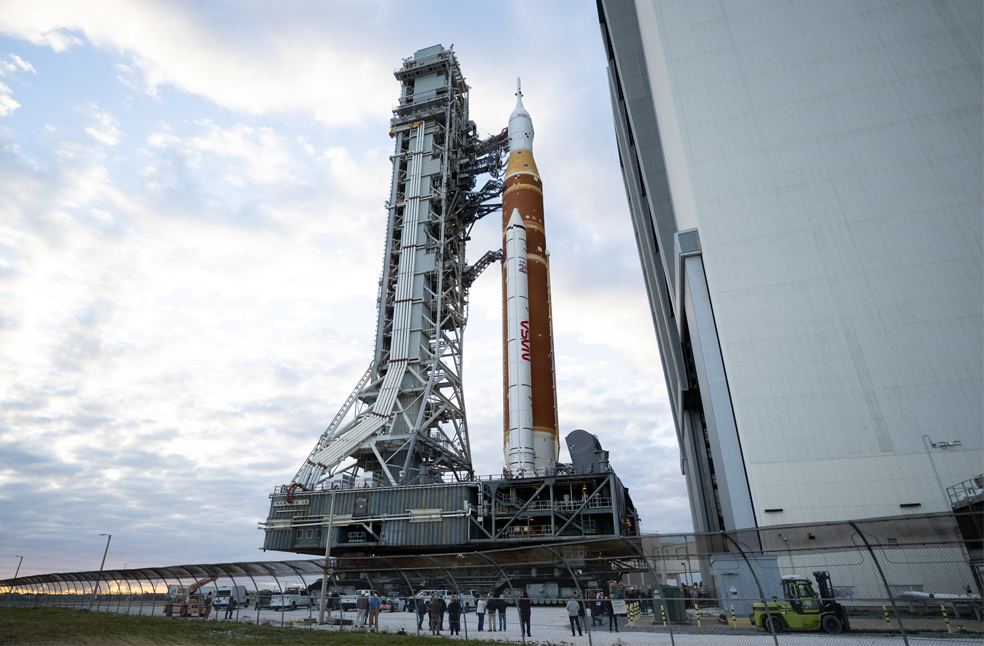
Cape Canaveral, Florida: NASA’s Artemis 2 mission took a major step forward as the enormous Space Launch System (SLS) rocket, carrying the Orion crew capsule, reached its launch pad.
The rocket will carry four astronauts around the moon next month, marking the first lunar flight in 50 years. The journey to the pad was painstaking, taking 11.5 hours as the rocket moved upright for four miles on Crawler Transporter 2.
The transporter, which weighs 3 million kilograms and is roughly half the size of a football pitch, burned about one litre of diesel every 3.5 metres, travelling at only one mile per hour for most of the trip. The rocket itself is taller than Big Ben.
Made it.
At 6:42pm ET on Jan. 17, the stacked Artemis II rocket and spacecraft reached Launch Pad 39B after a nearly 12-hour journey from the Vehicle Assembly Building at @NASAKennedy in Florida. pic.twitter.com/lpayqG5wNF
— NASA Artemis (@NASAArtemis) January 18, 2026
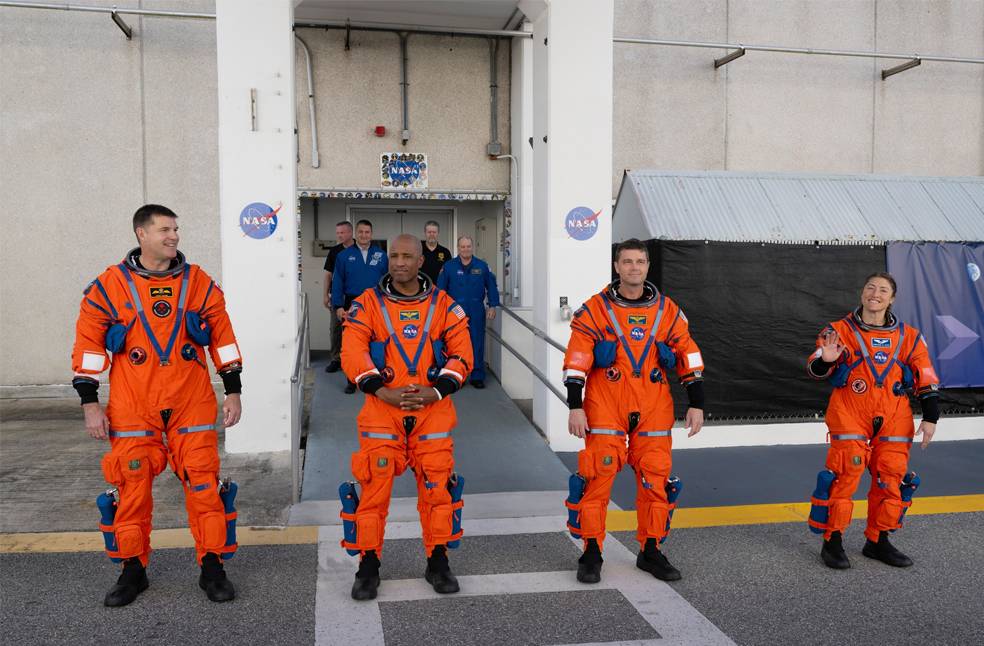
As the rocket rolled to the launch pad, the crew revealed personal items they would carry into space. Mission commander Reid Wiseman plans to take a blank piece of paper and a pen to write his thoughts during the journey.
Mission pilot Victor Glover will bring his Bible and heirlooms from his daughters and wife, while mission specialist Christina Koch will carry handwritten notes from loved ones. Mission specialist Jeremy Hansen attached four moon pendants worn by his wife and children to the rocket.
NASA is currently in a close space race with China, which plans to land taikonauts on the moon by 2030. Delays in SpaceX’s Starship, which will transport astronauts from the Orion capsule to the lunar surface, have pushed back NASA’s lunar landing under Artemis to 2028, three years later than originally planned.
This mission will target the moon’s rugged south pole, an area never visited by humans. Scientists are particularly interested in the permanently shaded craters where deep-frozen water ice may exist.
This water could provide drinking water, oxygen for breathing, and components for rocket fuel, supporting future lunar bases and exploration. The mission will also study lunar geology and explore the potential for mining minerals to transport back to Earth.
Although the Artemis 2 rocket is 13 metres shorter than Saturn V, it is about 15 percent more powerful, producing 8.8 million pounds of thrust, equivalent to 28 jumbo jets, and capable of lifting 27 tonnes to deep space. To escape Earth’s gravity and reach the moon, it must achieve a speed of 24,000 mph.
Once on the launch pad, NASA crews will begin intensive testing, including a “wet dress rehearsal” fuelling test on February 2, four days before the first launch window. The results of these tests will determine if Artemis 2 is ready for the planned 6 February launch.
In addition, NASA will conduct comprehensive checks of the SLS rocket and Orion crew capsule, along with run-throughs with the Artemis 2 astronaut crew, to ensure mission readiness and safety ahead of the historic lunar journey.
RELATED POST | NASA prepares powerful rocket for historic Artemis II mission
