


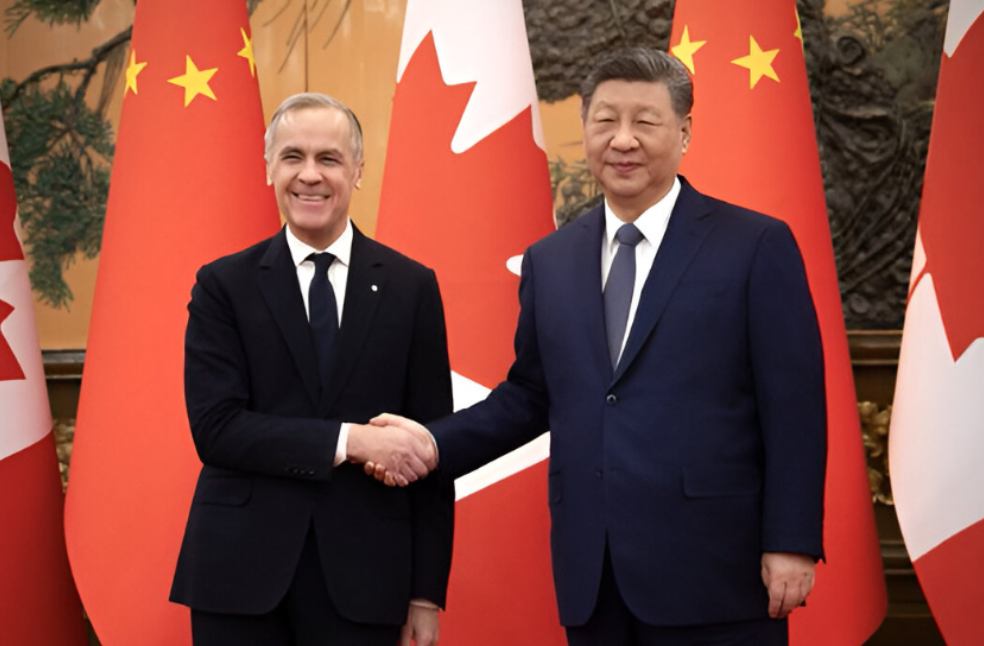
Beijing: Canada has announced a significant shift in its foreign and trade policy after Prime Minister Mark Carney confirmed a new agreement with China that will see both countries ease tariffs on key goods.
Speaking after the deal was reached, Carney said Canada must take the world as it is, not as we wish it to be, underscoring a pragmatic approach to global relations despite ongoing concerns about China’s human rights record. The comments mark a notable change in tone from last year, when Carney described China as the biggest security threat facing Canada.
Under the agreement, Canada will reduce tariffs on Chinese electric vehicles from 100 percent to 6.1 percent for the first 49,000 vehicles imported annually, with the quota expected to rise to 70,000 within five years. In return, China will lower tariffs on Canadian canola seed from 84 percent to around 15 percent by March and remove duties on canola meal, lobster, crab and peas until at least the end of the year. Beijing has also agreed to lift visa requirements for Canadian visitors, according to Carney.
We’re recalibrating Canada’s relationship with China — strategically, pragmatically, and decisively — to the benefit of the people of both our nations. pic.twitter.com/3bGRhvQLsU
— Mark Carney (@MarkJCarney) January 16, 2026
Experts say the deal represents a strategic recalibration driven by growing uncertainty in Canada’s relationship with the United States. Eric Miller, president of the Rideau Potomac Strategy Group, said the prime minister is signalling that Canada will no longer simply wait for Washington’s direction. Eric Miller warned there is a reasonable chance Canada could face 2026 without a workable trade agreement with the US.
Domestic reaction has been divided. Saskatchewan Premier Scott Moe welcomed the move, saying it would bring relief to farmers who have been hit hard by Chinese retaliatory tariffs. Ontario Premier Doug Ford criticised the decision, warning that easing EV tariffs could damage Canada’s auto sector and lead to job losses.
Industry analysts expect Chinese automakers to gain ground in Canada following the tariff cuts. Vivek Astvansh of McGill University estimates Chinese brands could account for around 10 percent of Canada’s EV market, potentially increasing competition for US-based manufacturers such as Tesla.
While the White House response has been mixed, US trade representative Jamieson Greer called the agreement ‘problematic’, while President Donald Trump welcomed the development, saying countries should pursue deals with China if they benefit economically.
The agreement comes as the future of the USMCA trade pact remains uncertain and follows months of trade tensions between Washington and Ottawa over metals and automotive tariffs. Analysts say Carney’s move reflects an effort to diversify Canada’s economic partnerships and reduce reliance on a volatile US trade environment.
MOST READ | Remote Andes artist wins prestigious Artes Mundi Prize in Wales
