


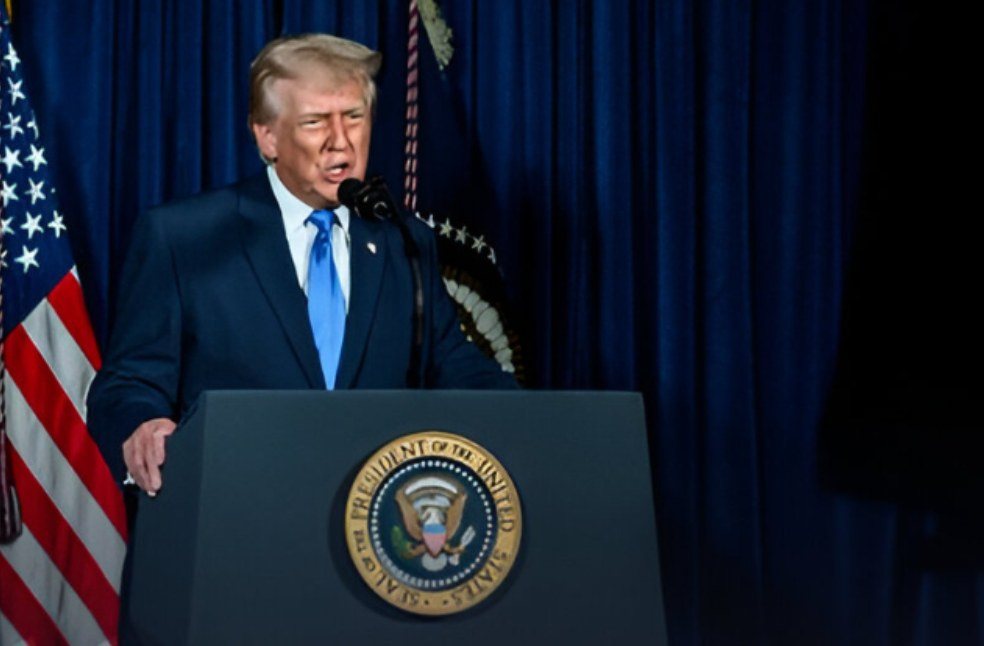
Washington: Tariff enforcement has taken a new direction after US President Donald Trump announced a 25 percent levy on goods from countries that do business with Iran.
The tariff has been described as taking effect immediately, although no further details have been provided about how ‘doing business’ with Iran will be defined or which industries will be most affected.
The tariff announcement has come as protests in Iran have entered a third week, fuelled by deepening economic hardship and anger over government leadership. Trump has said that the measure is designed to apply pressure on Iran and on countries that continue commercial relations with Tehran despite longstanding international sanctions.
China has been identified as Iran’s largest trading partner, followed by Iraq, the United Arab Emirates, Turkey and India. The tariff could therefore affect a wide range of global trade flows if fully enforced. The White House has not released any clarification on which imports would face the strongest impact or how compliance would be monitored.
The tariff policy has followed warnings from the US administration that stronger action remains possible. White House spokeswoman Karoline Leavitt has said that military options, including air strikes, remain under consideration. The administration has indicated that all tools remain available if Iranian authorities are found to be responsible for harm to protesters.

Economic instability has been central to the unrest in Iran. Anger has intensified after the Iranian rial has continued to fall sharply against the US dollar, reducing purchasing power and driving up the cost of basic goods. On December 28, shopkeepers in Tehran joined street demonstrations after another steep decline in the currency’s value.
According to the US-based Human Rights Activist News Agency, nearly 500 protesters and 48 security personnel have been confirmed killed since the demonstrations began. Other sources have suggested the true toll could be significantly higher. Thousands more people have reportedly been arrested, though an internet blackout has made verification extremely difficult for international media organisations.
The tariff escalation has also been tied to wider economic pressure already facing Iran. International sanctions related to Iran’s nuclear programme have weakened the economy for years, while domestic issues such as corruption and poor governance have worsened the crisis. Inflation has climbed above 40 percent, sharply increasing the prices of essentials such as cooking oil and meat.
Trump has said Iranian officials had sought negotiations, but has also warned that action could come before any formal talks. The tariff decision has therefore been viewed as both an economic weapon and a diplomatic signal.
While the tariff announcement has generated global attention, its practical impact remains uncertain until further guidance is issued by the US government. Trade analysts have noted that enforcement mechanisms will be crucial in determining whether the tariff becomes a symbolic statement or a transformative economic measure.
POPULAR | Grok banned in Malaysia and Indonesia over deepfake concerns
