


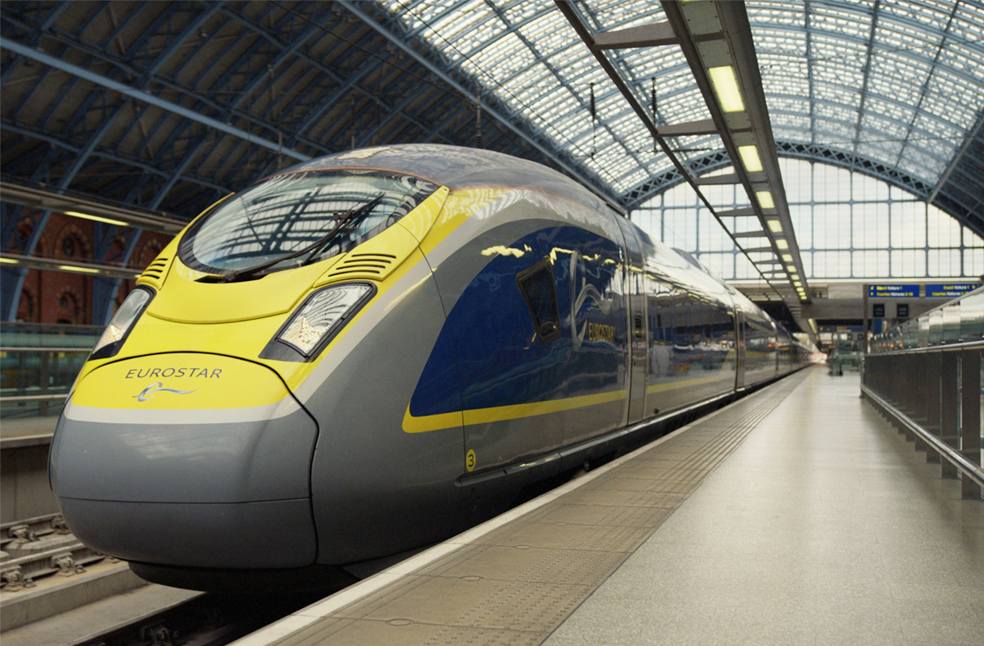
London: Eurostar passengers are facing a second day of possible disruption after a power outage in the Channel Tunnel caused widespread travel chaos on December 30, leaving thousands affected during the peak New Year travel period.
The incident was caused by a fault in the overhead power supply inside the Channel Tunnel, alongside a broken-down LeShuttle train, which together blocked all routes through the tunnel.
As a result, multiple Eurostar and LeShuttle services were suspended, and some passengers remained onboard trains for several hours, including overnight, while trains were stationary near the tunnel entrances.
Limited services resumed on December 30 evening after one of the tunnel’s two main lines reopened, but delays continued. Getlink, the operator of the Channel Tunnel, confirmed that repair work on the power supply was ongoing throughout the night and noted that it hoped operations would return to normal overnight.
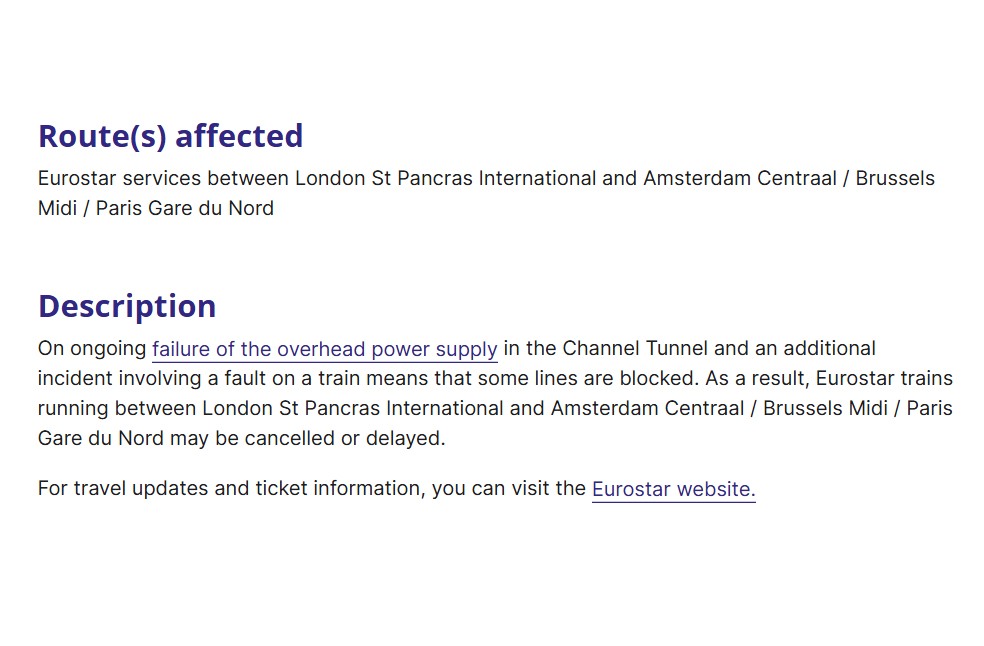
Earlier on December 30, Eurostar urged customers to rebook their journeys for another day where possible, offering free exchanges, and advised passengers not to travel to stations if their trains had already been cancelled. By midday, at least a dozen Eurostar services operating between the UK, France, Belgium, and the Netherlands had been cancelled.
Eurostar apologised for the disruption and remarked that affected passengers could change their travel plans free of charge, cancel their bookings for a full refund, or request an e-voucher.
National Rail advised passengers not to come to London St Pancras International if their Eurostar service was cancelled, while the UK Department for Transport warned that disruption was likely to continue for the remainder of the day as faulty overhead cables were repaired.
At the height of the disruption, only one of the Channel Tunnel’s two main tunnels was available for rail traffic, with services operating on a reduced and alternating basis. Eurostar services gradually resumed, including the 15:04 train from London to Brussels, which departed shortly after 16:00. By 18:00, only a limited number of services to Paris Gare du Nord and Brussels were scheduled to leave London St Pancras.
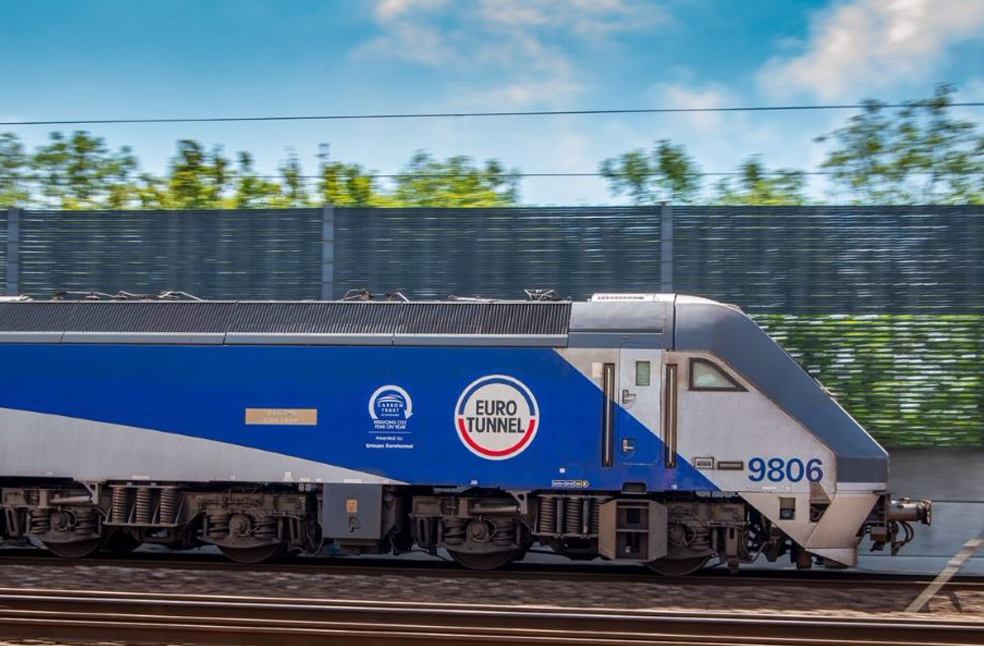
Images shared from within the tunnel showed damaged overhead electrical cables strewn across the tracks, highlighting the scale of the technical fault.
The broken-down LeShuttle train was later removed from the tunnel. LeShuttle confirmed that none of its passengers were left stranded inside the tunnel and apologised for the disruption, warning customers to expect delays of around five hours.
The service resumed gradually on a single track shortly before 15:00 local time (14:00 GMT), operating alternately in both directions with significant delays. Additional shuttle services were planned to operate through the evening and into the following morning.
Road traffic congestion linked to the disruption, including queues near the LeShuttle terminal in Folkestone and congestion on the M20, eased later in the day as tunnel operations partially resumed.
ALSO READ | Are saunas and cold swims really good for you?
