


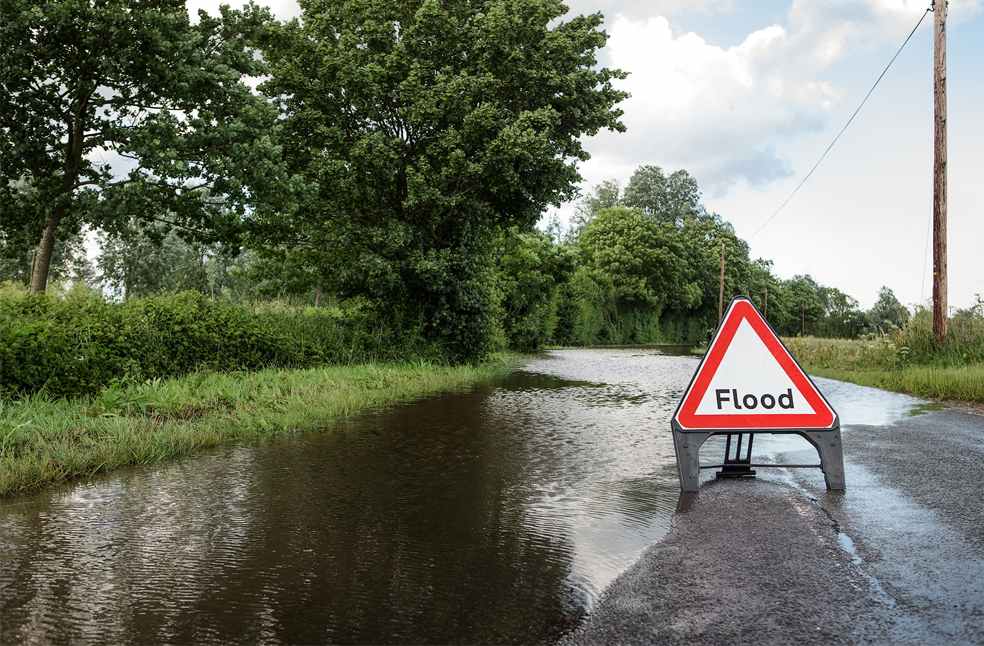
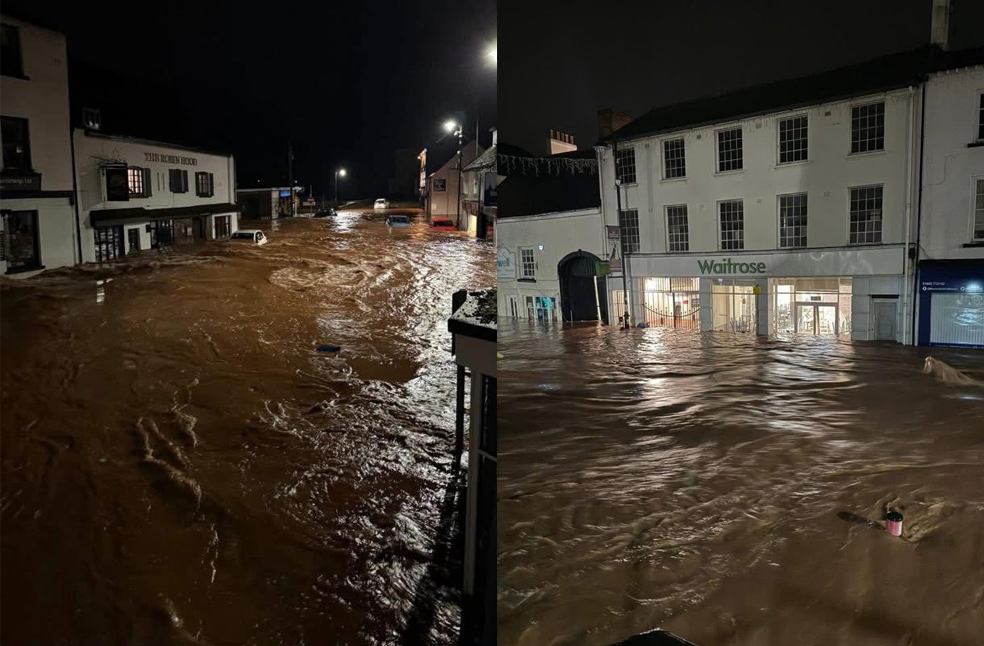
Monmouth, South Wales: A major incident has been declared in South Wales after ‘severe and widespread flooding’ struck the region overnight, with further warnings in place and much of England preparing for a cold spell starting November 17.
South Wales Fire and Rescue Service announced the major incident in Monmouth at around 1.30 am. Emergency crews have been responding continuously, carrying out rescues, evacuations, and welfare checks across affected communities.
Area Manager Matt Jones described it as a ‘large-scale incident,’ praising emergency crews and partner agencies for working tirelessly through challenging conditions. Jones urged the public to stay away from the Monmouth area entirely, noting that floodwaters are extensive and emergency routes must remain open for responders.
Our thoughts are with everyone who has been affected by flooding from #StormClaudia
There are currently 4 severe flood warnings in force:
River Monnow at Watery Lane, Over Monnow
River Wye at Monmouth defended areas
River Monnow at Forge Road, Osbaston
River Monnow at Skenfrith pic.twitter.com/1JSE2ZZiZr— Cyfoeth Naturiol Cymru | Natural Resources Wales (@NatResWales) November 15, 2025
By 6 am, Natural Resources Wales had issued four severe flood warnings, indicating a ‘significant risk to life and major disruption.’ These were issued for locations along the River Monnow in Skenfrith, Osbaston, and Over Monnow, as well as the River Wye at Monmouth.
Monmouthshire County Council advised residents to avoid travel, warning of widespread standing water, dangerous driving conditions, and severe impacts on the road network. Across Wales, eight additional flood warnings and 39 flood alerts are active. Meanwhile, England is facing 92 flood warnings and 194 flood alerts.
The flooding follows torrential rainfall brought by Storm Claudia, which triggered amber warnings across parts of the UK. Some regions received nearly a month’s worth of rain in 24 hours, with Tafalog in Gwent recording 81.8mm by 4 pm, about 60 percent of its typical November total.
At the same time, the UK Health Security Agency (UKHSA) has issued a yellow cold weather alert covering the East Midlands, West Midlands, North East, North West, and Yorkshire and The Humber from 8 am Monday, November 17, until 8 am Friday, November 21.
The agency warns of potential impacts on health and social care services, including increased risks for people aged 65 and above or those with existing health conditions. Temperatures are expected to drop below freezing in some areas next week.
Extreme weather has also caused significant travel disruption. Great Western Railway has urged passengers not to travel between London Paddington, Bristol, and South Wales due to flooded rail lines. Services between Exeter St Davids and Barnstaple have also been suspended. Avanti West Coast, CrossCountry, Northern, TransPennine Express, Transport for Wales, and Chiltern Railways are all reporting delays or cancellations.
The storm has affected other countries as well, including Spain, Portugal, and the Canary Islands, where it was officially named by Spain’s meteorological service. In Ireland, Met Éireann has issued heavy rain warnings for Dublin, Wexford, and Wicklow, warning of dangerous travel conditions and possible flooding.
A yellow rain warning remains in place until November 15 for most of Wales and an area of England south of York. Many areas could see 30–50mm of rain, with up to 100mm expected in parts of southeast Wales.
Northern Ireland is also under a yellow rain warning until noon November 15, with 10–20mm expected widely and over 40mm possible in the Mourne Mountains. The Met Office cautions that, due to saturated ground, further surface water and river flooding is likely.
MOST READ | Health emergency in Cuba as mosquito-borne diseases spike
