


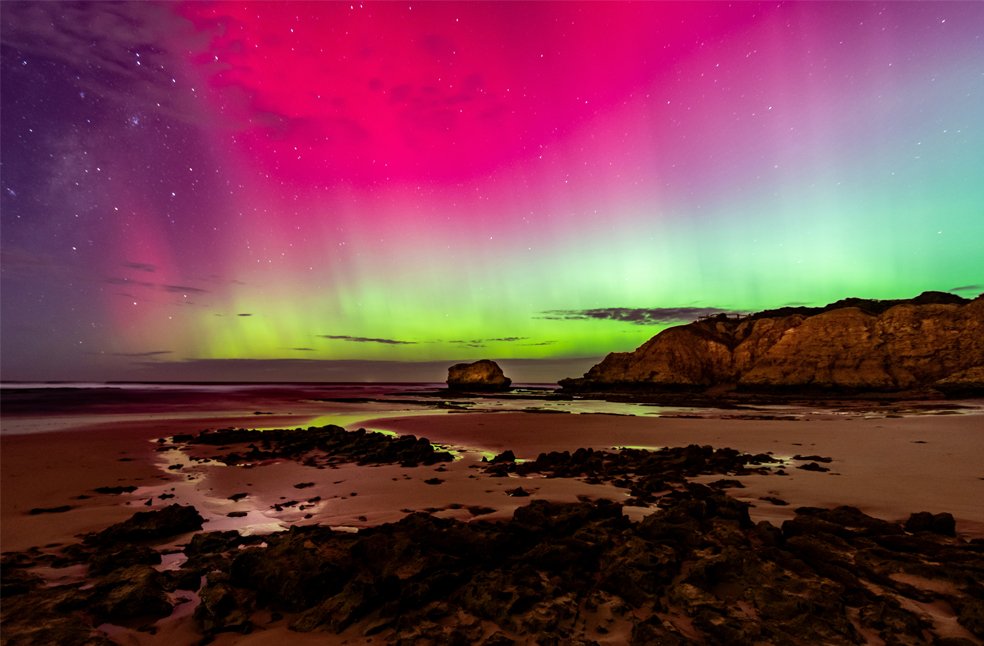
Sydney: Skywatchers across Australia are in for a rare celestial spectacle as a severe solar storm, one of the most powerful in recent years, could make the aurora australis, or southern lights, visible as far north as Sydney and Perth on November 12.
According to the Bureau of Meteorology’s Space Weather Forecasting Centre, the geomagnetic storm, classified as G4, one level below the maximum intensity, was triggered by multiple coronal mass ejections (CMEs), or massive bursts of plasma from the Sun. The agency has issued an aurora alert for ‘mid to southern parts of Australia,’ indicating potential visibility far beyond the usual regions.
Astronomers say the Aurora Australis may also light up skies over Tasmania, Victoria, and New South Wales, while New Zealand is expected to enjoy clear views. Dr. Laura Driessen of the Sydney Institute for Astronomy noted that the storm’s unusual strength means the lights could stretch into areas where they are rarely seen.
Astrophysicist Dr. Sara Webb from Swinburne University said that, November 12 night would be ‘the best chance’ to catch the display, advising viewers to head to dark, open areas away from city lights, look south, and let their eyes adjust. “You might only see faint red or green hues at first, but with a 10-second exposure photo, your camera will capture far more detail than your eyes can,” Webb added.
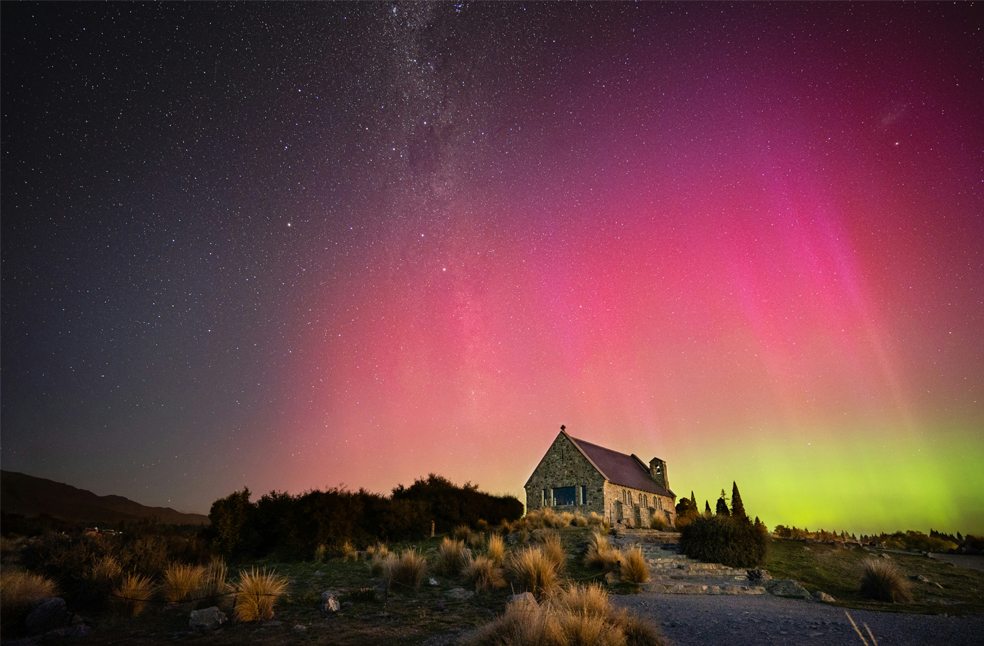
Vibrant colours in the sky
The Aurora Australis occurs when charged solar particles collide with Earth’s magnetosphere, exciting gases such as oxygen and neon in the upper atmosphere. As these particles return to normal energy levels, they release vibrant colours, painting the sky in shades of red, green, and purple.
Experts warn that intense solar storms can cause temporary disruptions to satellite operations, GPS systems, and radio communications, though such impacts remain rare. Dr. Webb noted that some satellite operators might place their systems in ‘sleep mode’ to protect against potential damage.
A similar solar storm in 2022 caused several Starlink satellites to burn up in Earth’s atmosphere, while the historic 2003 storm led to a blackout in Sweden and interference with half of Earth’s orbiting spacecraft.
Still, astronomers stress that no major service disruptions are expected during Aurora Australis. “It’s an incredible natural event. If conditions are right, this could be one of the most memorable aurora displays Australia has seen in years,” Dr. Driessen said.
MOST READ | Winter Wellness: Lifting your mood on dark days
