


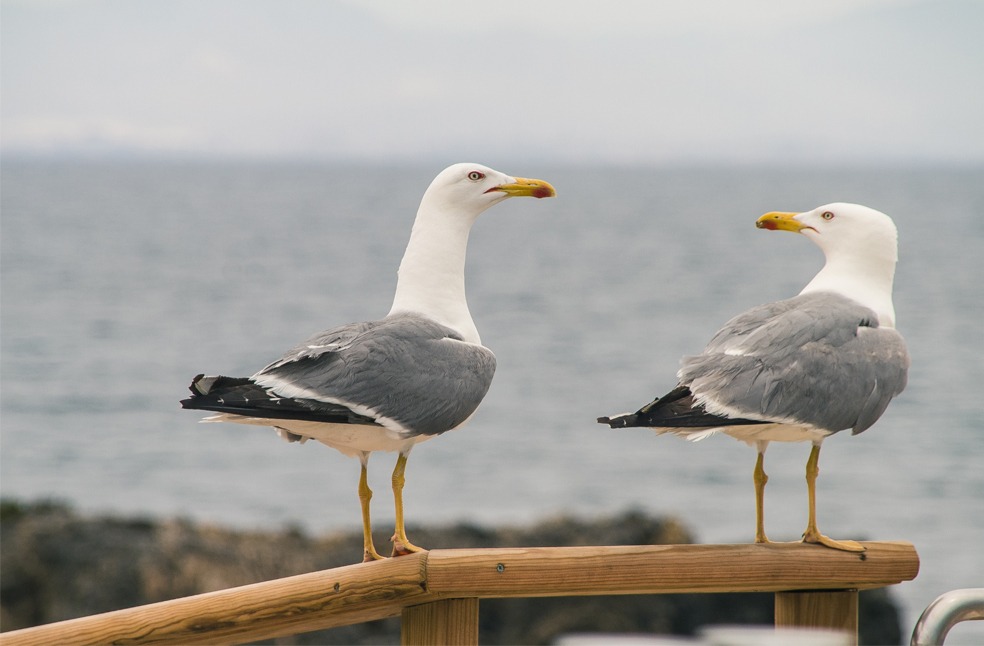
Cornwall, England: A team of animal behaviourists from the University of Exeter has found that shouting, rather than flapping hands or running away, is the most effective way to deter herring gulls from stealing food such as chips or Cornish pasties at British seaside towns.
Their research reveals that gulls respond more strongly to the tone and intensity of human voices than to volume or physical gestures, offering new insight into how wild animals interpret human vocal cues.
To test the gulls’ reactions, the researchers set up an experiment by placing a portion of chips in areas where gulls were likely to find them. When a gull approached, they played one of three different audio recordings:
- A male voice shouting the words, “No, stay away, that’s my food, that’s my pasty!”
- The same male voice speaking the same sentence in a calm tone.
- A neutral recording of a robin’s birdsong.
The study was conducted on 61 herring gulls across nine seaside towns in Cornwall, including both large and smaller coastal areas. The results showed that nearly half (about 50 percent) of the gulls exposed to the shouting voice flew away within one minute.
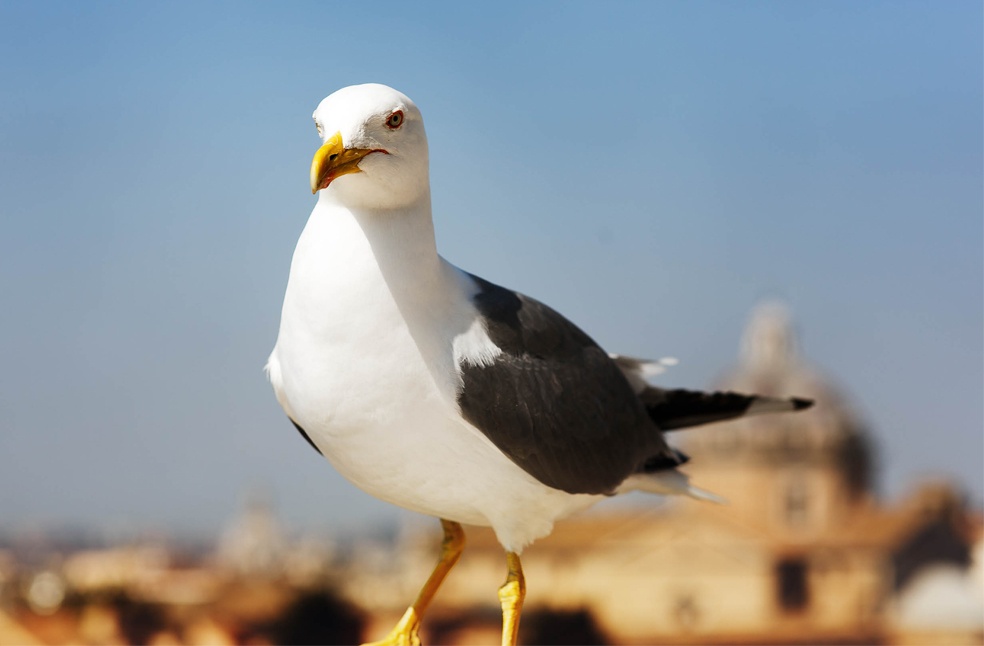
By comparison, only 15 percent of gulls exposed to the speaking voice took flight, though many of these still walked away from the food, apparently sensing some level of threat. Meanwhile, 70 percent of gulls that heard the robin song stayed in place, showing no fear response.
The researchers emphasized that both the shouting and speaking recordings were played at the same volume, meaning the birds were not simply reacting to loudness. Instead, they were responding to the acoustic characteristics and emotional tone of the voice.
This suggests that gulls can distinguish between different vocal delivery styles, even when the words and volume are identical. The study is believed to be the first to test whether wild, non-captive animals can perceive differences in human vocal tones when hearing the same sentence at equal loudness levels.
Dr. Neeltje Boogert from the Centre for Ecology and Conservation at the University of Exeter’s Penryn campus in Cornwall said that, “We found that urban gulls were more vigilant and pecked less at the food container when they heard a male voice, whether speaking or shouting. But while speaking made them stop and walk away, shouting made them fly away altogether.”
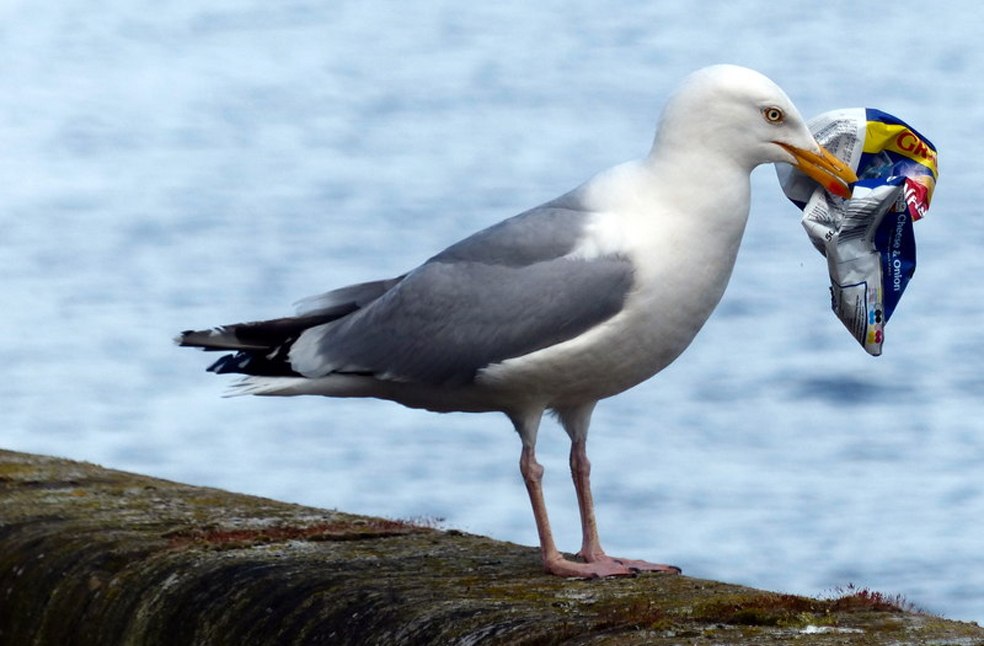
Boogert added that the reaction was not due to noise level but the way the words were spoken. “Normally, shouting is frightening because it’s loud, but here both sounds were the same volume; it was just the delivery that differed. It seems gulls pay attention to the way we say things, which hasn’t been observed before in any wild species, only in domesticated animals such as dogs, pigs, and horses.”
“They are a species of conservation concern, and this study shows peaceful ways to keep them away that don’t involve physical contact or harm,” Dr. Boogert stressed the findings offer a humane way to deter gulls without harming them.
Researchers also found that gull behaviour varied by location. They initially expected gulls in larger, busier towns like Penzance to be bolder, but results showed that gulls from smaller, tourist-heavy areas such as St Ives were more aggressive in approaching food. This may be because these gulls are more accustomed to scavenging human meals in highly touristic spots.
The research team plans to conduct future studies to see whether a woman’s voice produces a similar deterrent effect. Ultimately, the study concludes that a firm shout is the simplest, safest, and most effective way to fend off a persistent gull, no hand-waving or harm required.
ALSO READ | UK to phase out animal testing via AI and 3D Bioprinting
