


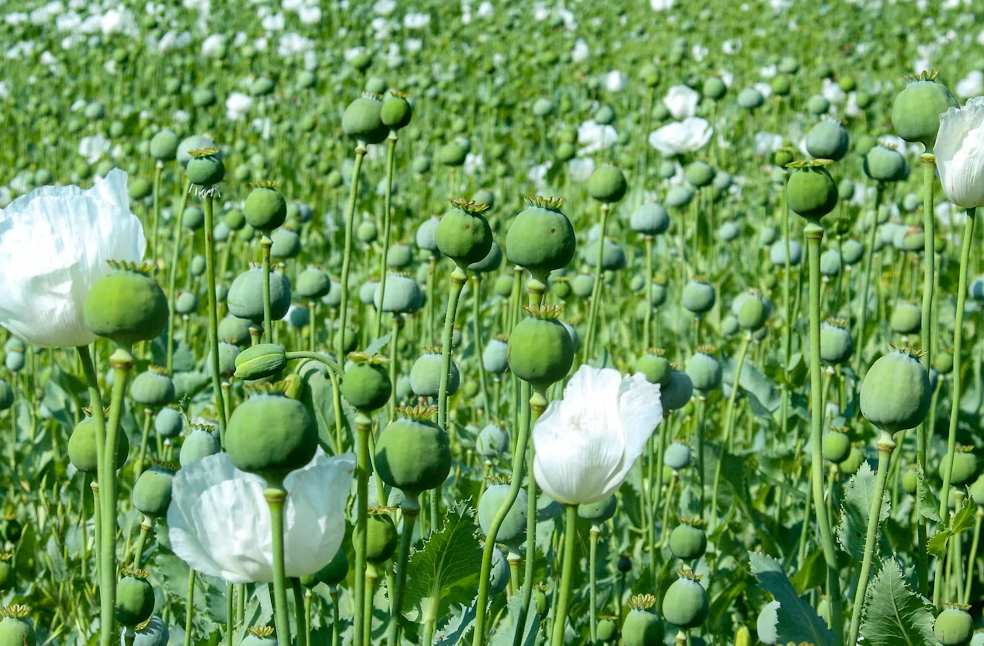
Vienna: The United Nations Office on Drugs and Crime (UNODC) has reported that opium farming in Afghanistan has decreased by one-fifth in 2025, marking another significant fall since the Taliban banned poppy cultivation in 2022.
The latest UN survey has found that the total area used for opium poppy cultivation has been estimated at 10,200 hectares this year, compared with 12,800 hectares in 2024. This 20 percent reduction follows a brief rebound seen last year but remains far below pre-ban levels when around 232,000 hectares were under cultivation.
According to the UNODC’s annual assessment, opium harvests have fallen even faster than the cultivation area, dropping by 32 percent to an estimated 296 tons. The collapse in production has had a major effect on global drug supply chains, as Afghanistan had long been the world’s largest producer of opium, the raw ingredient for heroin.
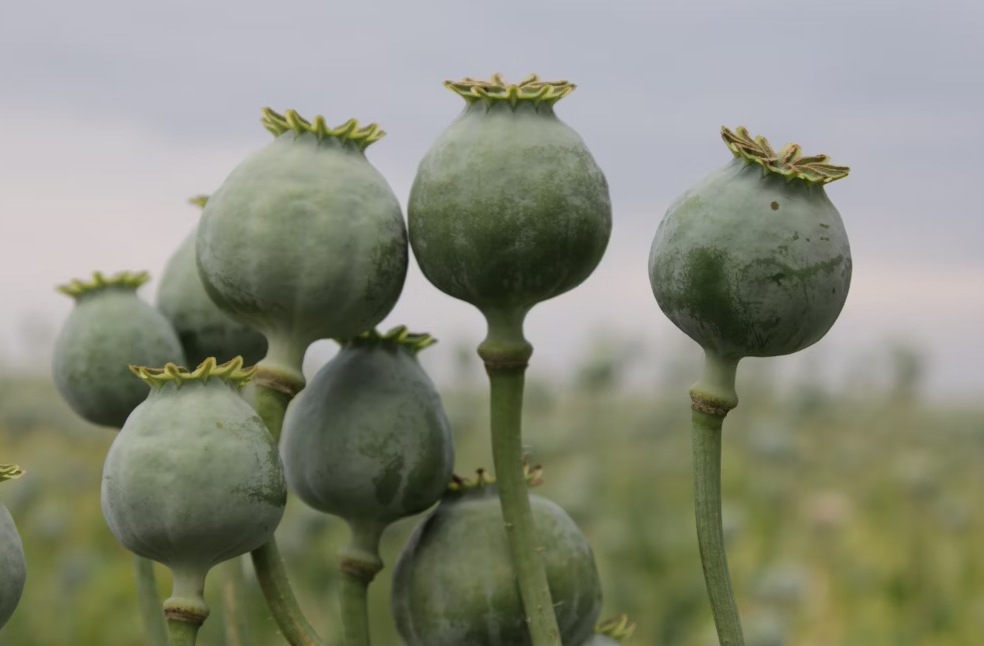
Despite the reduced harvest, dry opium prices have declined by 27 percent to $570 (£470) per kilogram, suggesting a shift in global market dynamics and a possible increase in illicit cultivation attempts in neighboring countries.
The UN agency has noted that the changing dynamics reflect how drug markets and trafficking networks are adapting to the ban. With agricultural-based opiate production declining, synthetic drug manufacturing, especially methamphetamine, has continued to grow. Organized crime networks are increasingly turning to synthetic alternatives because of easier production, higher profit margins, and resilience against climate challenges.
This trend signals a structural shift in the global narcotics trade, with Afghanistan’s declining opium output reshaping the patterns of production, trafficking, and enforcement across the region. Experts have indicated that this decline in opium farming could have far-reaching socio-economic effects on Afghan rural communities that have depended on the crop for decades.
MOST READ | Zohran Mamdani wins New York mayor race in major shift
