


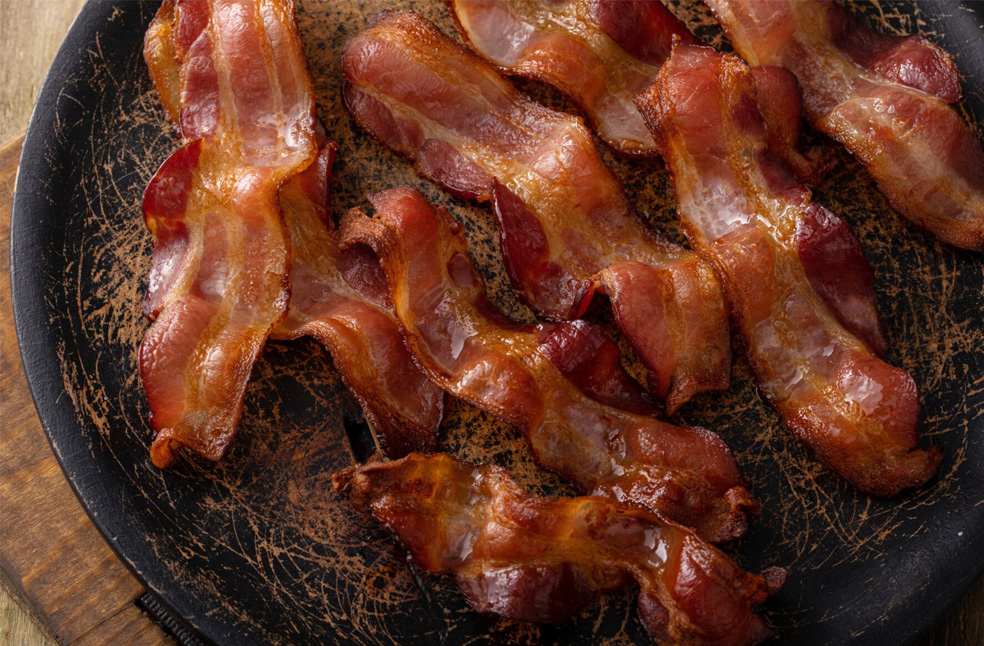
London: Leading scientists have urged the UK government to require cigarette-style warning labels on bacon and ham, highlighting that chemicals used in processing these meats can cause bowel cancer.
The scientists criticized successive British governments for doing ‘virtually nothing’ over the past decade to reduce risks from nitrites, despite overwhelming evidence of their harm.
October 2025 marks ten years since the World Health Organization (WHO) declared processed meat carcinogenic to humans, placing it in the same category as tobacco and asbestos.
Nitrites, the chemicals added to bacon and ham during processing, serve to cure and preserve the meat and give it a pink color, but scientific research has confirmed their connection to cancer.
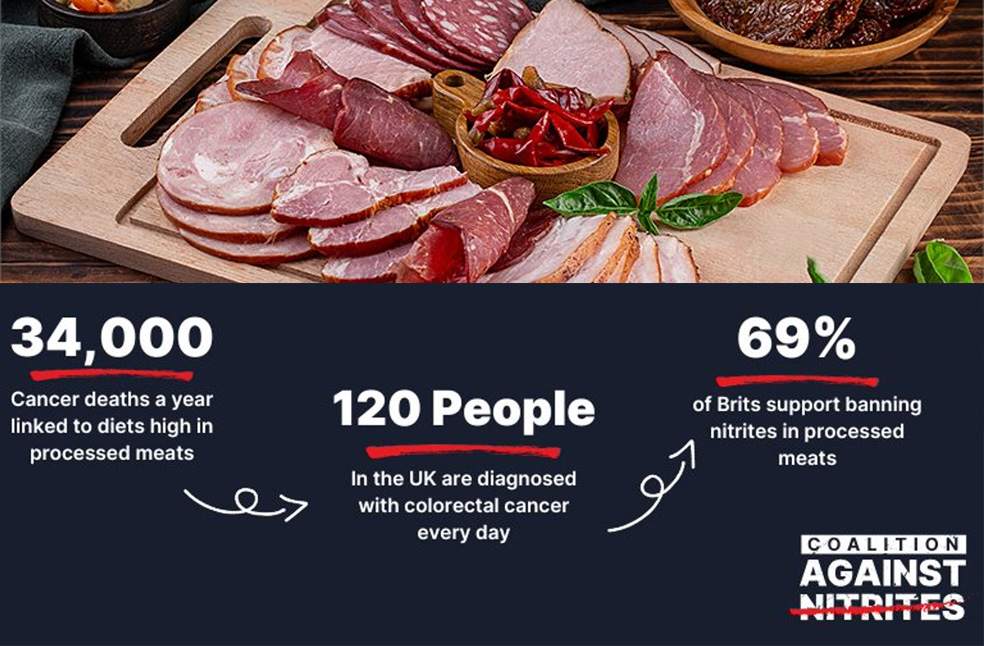
Experts estimate that the lack of action in the UK since the WHO declaration has contributed to 54,000 cases of bowel cancer, costing the NHS £3 billion.
Four of the scientists involved in the WHO’s International Agency for Research on Cancer (IARC) warning, along with other experts, have written to Wes Streeting, the UK Health Secretary, urging bold measures to reduce nitrite exposure.
The letter, organized by the Coalition Against Nitrites, recommends that 90–95 percent of bacon and ham packets containing nitrites carry health warnings and that food producers phase out nitrites from processed meat over the coming years. Some brands are already nitrite-free.
Professor Denis Corpet, Emeritus Professor of food safety and nutrition at Toulouse University, remarked that, “Consumers deserve clear information. Most people don’t realise that the WHO classifies nitrite-cured meats like bacon and ham in the same carcinogenic category as tobacco and asbestos.”
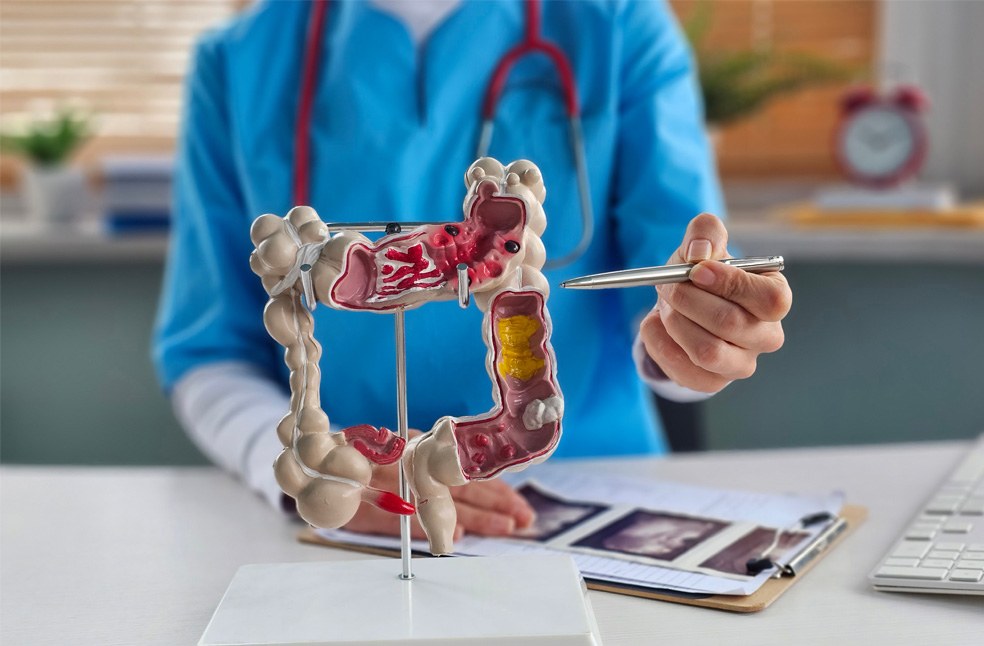
“Ministers have a responsibility to protect public health and reduce the risk of bowel cancer linked to these products, and should introduce mandatory warning labels on product packaging similar to ‘smoking kills’ on cigarettes,” Corpet added.
The IARC reported in 2015 that consuming 50 grams of processed meat daily increases the risk of colorectal (bowel) cancer by about 18 percent, based on analyses of ten studies.
Kate Oldridge-Turner, Head of Policy and Public Affairs at the World Cancer Research Fund (WCRF), confirmed that processed meat increases the risk of colorectal cancer, through chemical reactions in the body involving nitrites that form carcinogenic compounds.
While she did not back mandatory warning labels, Turner urged that dietary guidelines should reinforce limited consumption of processed meats and promote healthier food availability, particularly in public institutions such as schools.
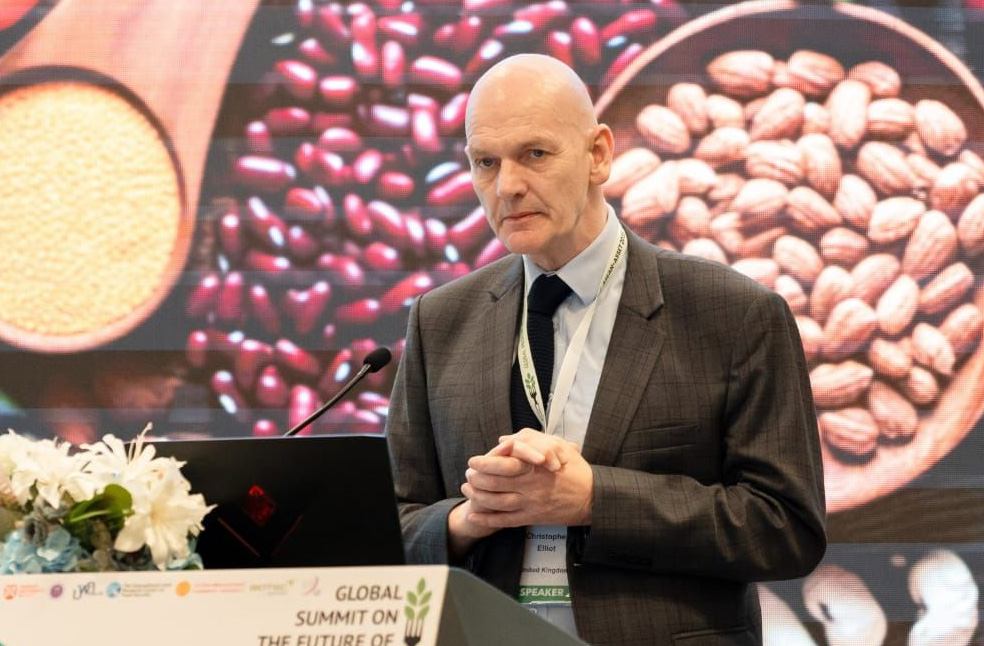
Professor Chris Elliott, a former government food safety adviser and letter signatory, criticized the UK government for its inaction. “A decade on from the WHO report, the UK government has done virtually nothing to reduce exposure to nitrites, the curing agents that make these products pink and long-lasting but also create nitrosamines, compounds known to trigger cancer.” Elliott noted.
In response, a Department of Health and Social Care spokesperson said that, “The Food Standards Agency has made clear that the link between nitrates and nitrites and cancer remains inconclusive.”
The scientists’ call reflects growing concern that the public remains largely unaware of the risks posed by nitrite-cured meats, and that urgent action is needed to reduce exposure, improve consumer awareness, and ultimately prevent additional cases of bowel cancer in the UK.
ALSO READ | Amazon Outage: Automation bug caused global disruptions
