


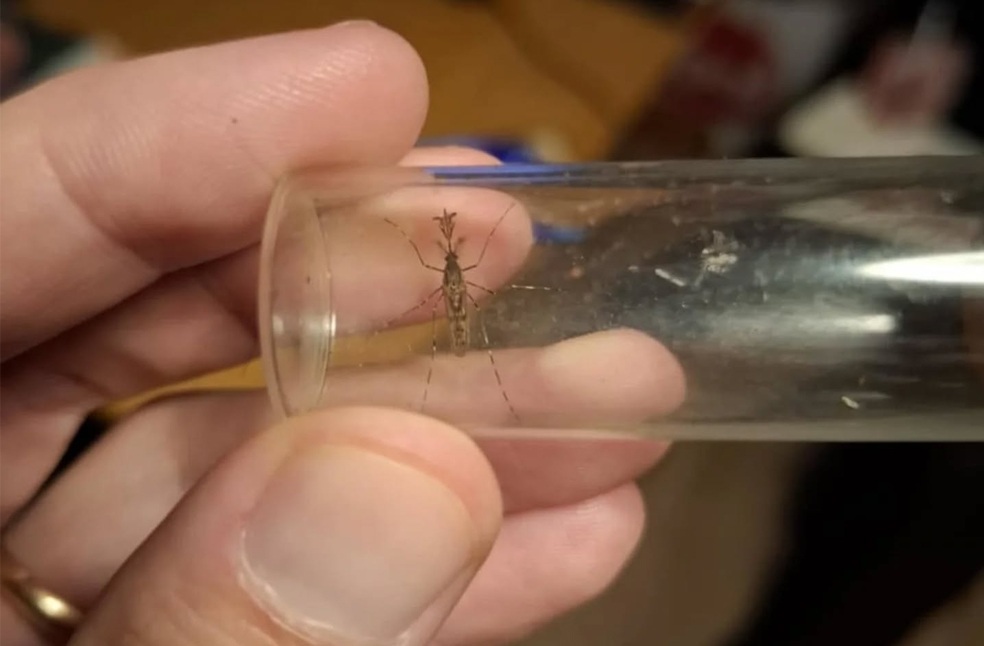
Reykjavik, Iceland: Mosquitoes have been discovered in Iceland for the first time after the country experienced record-breaking heat this spring, ending its status as one of the few mosquito-free regions in the world.
Insect enthusiast Bjorn Hjaltason observed the insects over several nights last week while using wine-soaked ropes to monitor moths. Hjaltason found two female mosquitoes and one male, which were later identified as Culiseta annulata, a species capable of surviving winter. Before this discovery, only Antarctica shared Iceland’s mosquito-free distinction.
The mosquitoes were found in Kjós, a glacial valley southwest of Reykjavik. Hjaltason posted images of the insects on a local wildlife Facebook page, describing ‘a strange fly on a red wine ribbon’ and noting, “I could tell right away that this was something I had never seen before… the last fortress seems to have fallen.”
The specimens were sent to the Icelandic Institute of Natural History, where entomologist Matthías Alfreðsson confirmed their identity. The species is common in parts of Europe and North Africa, but it remains unclear how they reached Iceland. Hjaltason speculated the insects could have arrived via nearby ports, such as Grundartangi, where ships and containers frequently bring foreign species.
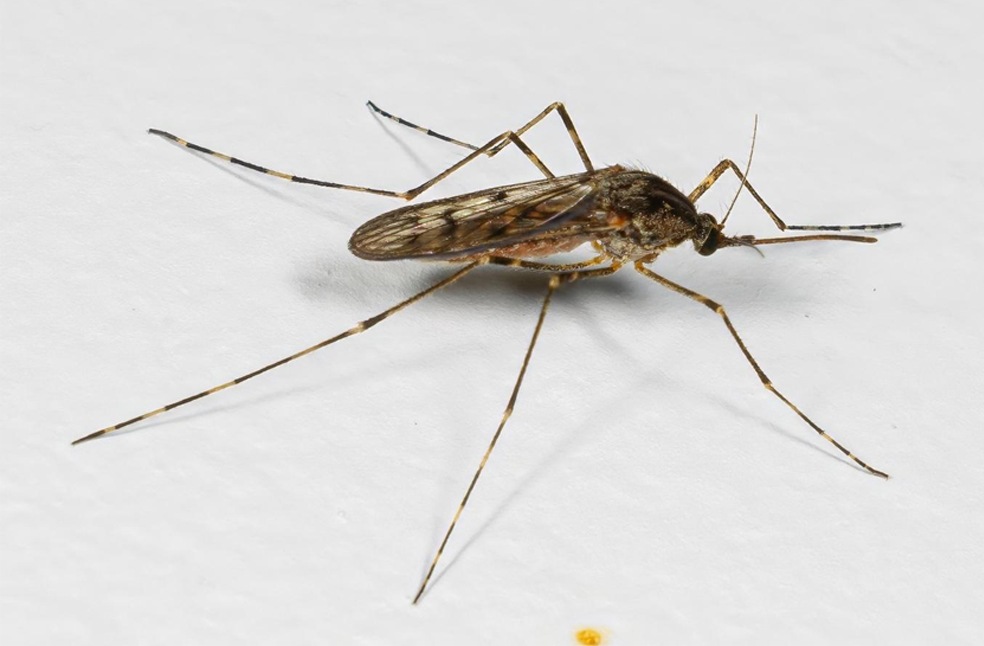
Iceland’s cold climate and lack of stagnant water have historically prevented mosquito populations from establishing, according to the World Population Review. However, this year’s spring heatwave broke several temperature records.
Typically, Iceland sees highs of around 20°C (68°F) in May for only two or three days, but this year’s heat lasted for ten consecutive days across the country. May 2025 also saw the warmest day on record, with temperatures reaching 26.6°C (79.8°F) at Eglisstaðir Airport.
A June study by the Global Heat Health Information Network warned that rising temperatures could have ‘significant’ impacts on ecosystems sensitive to climate shifts. Last year was the hottest on record globally, with the UN noting that human activity has ‘unequivocally’ warmed the atmosphere, oceans, and land.
Further monitoring in the spring will be necessary to determine if the mosquitoes have become fully established in Iceland. Hjaltason also noted the possibility that more mosquitoes could have arrived beyond the three he observed, and noted that, “But if three of them came straight into my garden, there were probably more.”
MOST READ | New Delhi chokes as Diwali fireworks worsen air quality
