


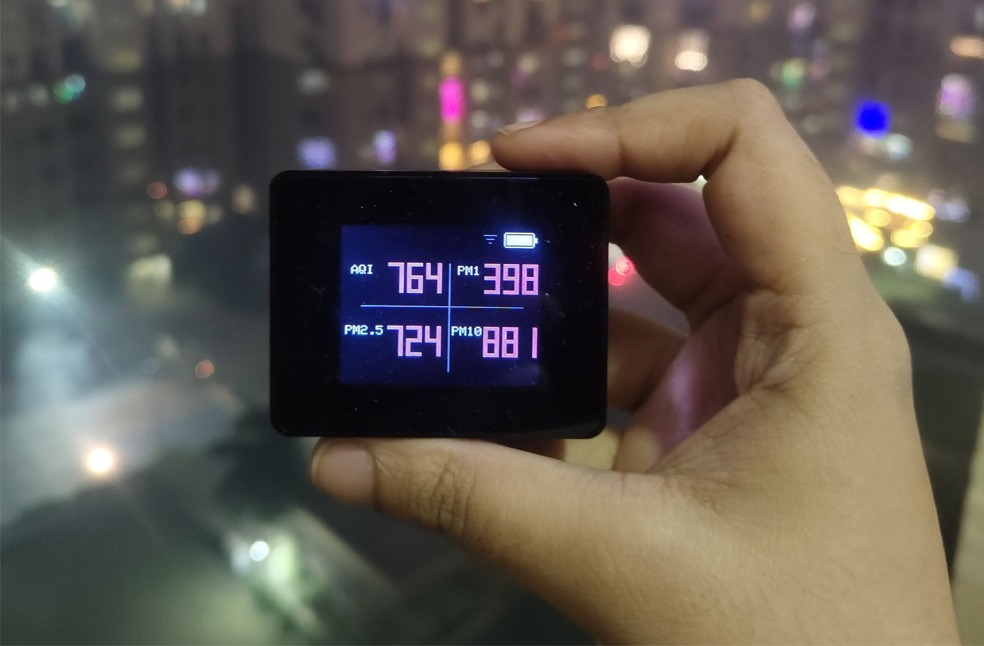
New Delhi: Diwali fireworks have significantly worsened air quality in India’s capital, New Delhi, making it one of the most polluted cities in the world. On October 21, the city’s air quality index (AQI) reached 442, according to Swiss air quality monitoring firm IQAir.
As is common every year, the widespread use of fireworks on October 20, marking the Hindu festival of lights, added to existing pollution from traffic, industry, and agricultural burning that typically accumulates in the cooler months, resulting in New Delhi topping global pollution charts, IQAir noted.
The concentration of PM2.5, fine particulate matter small enough to enter the lungs and cause serious illness, was measured at more than 59 times the World Health Organization’s recommended annual guideline. India’s Central Pollution Control Board (CPCB) rated the air quality as ‘very poor,’ with an AQI of 350 (0–50 is considered good).
Visuals from #Akshardham as a hazy morning engulfs Delhi, the Air Quality slipping into the ‘Poor’ category, with GRAP-2 curbs to combat rising #pollution levels.#Delhi #AirPollution #AQI #GRAP2 #PollutionAlert #AirQuality #AirCrisis #WeatherUpdate pic.twitter.com/18Dk7PDErM
— DD News (@DDNewslive) October 21, 2025
The toxic air is partly fueled by Diwali fireworks, which are being celebrated from October 18–23. Although India’s Supreme Court recently relaxed the ban on firecrackers, allowing so-called ‘green crackers’ with lower emissions to be used for a maximum of three hours on Sunday and Monday, widespread reports indicate Diwali fireworks were set off well beyond the permitted times.
The Ministry of Earth Sciences has warned that New Delhi is unlikely to see immediate relief, predicting air quality will remain ‘Very Poor to Poor,’ with AQI levels ranging from 201 to 400. The capital and neighboring districts are prone to thick winter smog, as cold, heavy air traps construction dust, vehicle emissions, and smoke from agricultural fires, leaving the city’s 20 million residents vulnerable to respiratory illnesses.
Authorities have in the past attempted measures such as closing schools, halting construction work, and restricting private vehicle movement to mitigate pollution. Last November, Delhi experienced weeks of deadly smog, with AQI levels peaking at over 1,700, at least 17 times higher than the acceptable limit.
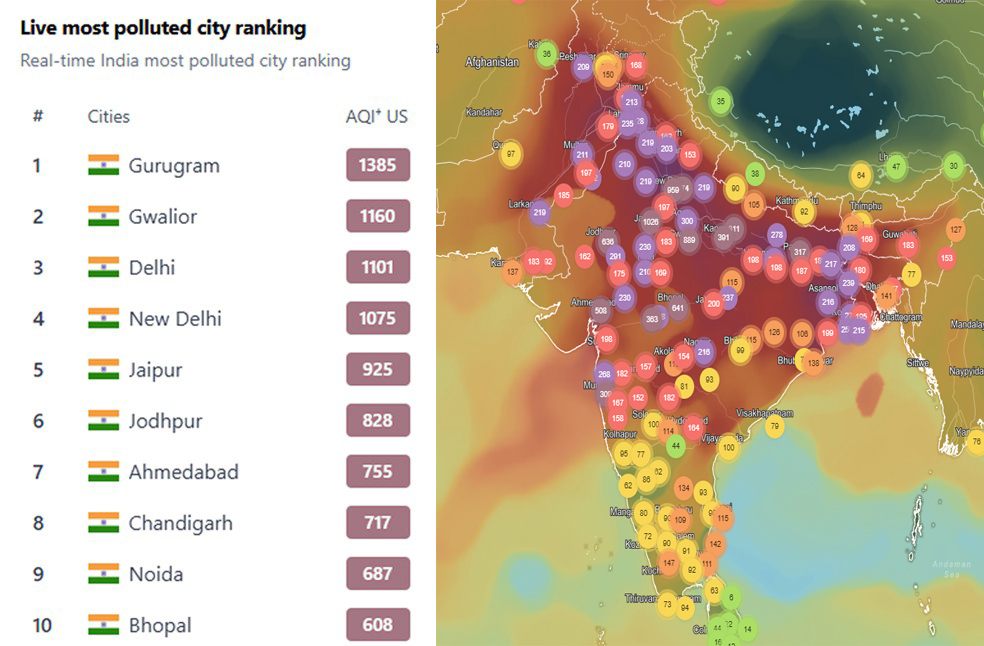
Images captured on October 21 show commuters covering their faces as smog engulfs the city skyline and roads, highlighting the severity of the pollution.
The impact of pollution extends beyond India. Lahore, Pakistan, recorded the second highest AQI globally at 234. The government has implemented an ‘emergency plan’ to curb pollution, including controlling farm fires, restricting smoke-emitting vehicles, and deploying anti-smog guns in affected areas.
Sajid Bashir, a spokesperson for Punjab’s Environment Protection Agency, stated that, “Right now, the major issue is the air coming from Indian Punjab and other parts, which is affecting the air quality in various parts of Pakistani Punjab.”
Residents of New Delhi and surrounding regions continue to face health risks as the city battles the combination of festival-related pollution, winter smog, and emissions from traffic and industry, making immediate improvements in air quality unlikely.
ALSO READ | UK launches new ‘V Levels’ to reform post-16 education
