


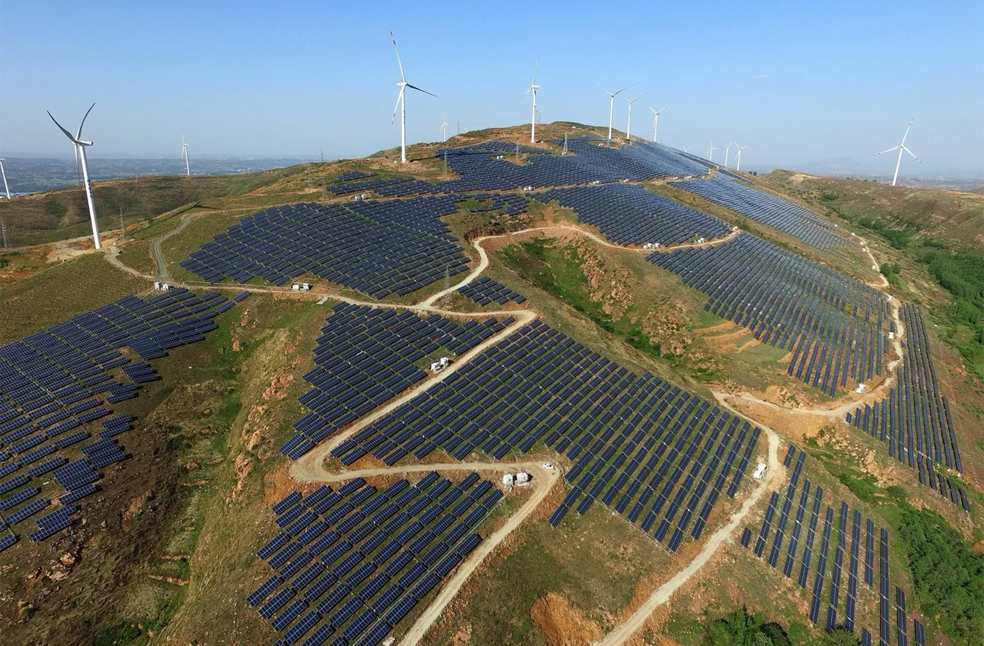
London: For the first time, solar and wind farms across the globe have generated more electricity than coal-fired power plants, marking a major turning point in the world’s energy landscape, according to new data from the climate think tank Ember.
In its latest report, Ember revealed that during the first six months of 2025, renewable energy production outpaced the world’s rising electricity demand, resulting in a slight decline in coal and gas use worldwide.
Solar energy played a central role in this transformation; global solar and wind output grew rapidly, with solar power increasing by almost one-third compared to the same period in 2024, meeting 83 percent of the total increase in global electricity consumption. Wind energy also rose by just over 7 percent, allowing renewable sources collectively to surpass fossil fuels for the first time in recorded history.
China exported $120bn in clean tech in Jan-Jul 2025 — more than the fossil fuel exports by the US over the same period.
Clean tech demands is skyrocketing as more countries seek their benefits, from low-cost power to cheaper vehicles. @businesshttps://t.co/UKVC7laBNX
— Ember (@ember_energy) October 6, 2025
Małgorzata Wiatros-Motyka, a Senior Electricity Analyst at Ember and the author of the report, described this milestone as ‘a crucial turning point’ for the global power system. “Solar and wind are now growing fast enough to meet the world’s growing appetite for electricity. This marks the beginning of a shift where clean power is keeping pace with demand growth,” Wiatros-Motyka added.
China and India were the primary drivers of this surge in solar and wind energy, in contrast to the United States and Europe, which continue to rely more heavily on fossil fuels. A separate International Energy Agency (IEA) report projects that global renewable energy capacity could more than double by 2030, with solar and wind playing the dominant role.
Fatih Birol, Executive Director of the IEA, remarked that, “The growth in global renewable capacity in the coming years will be dominated by solar PV – but with wind, hydropower, bioenergy and geothermal all contributing, too.”
The IEA added that China will continue to lead the world’s renewable energy expansion, while India is expected to emerge as the second-largest growth market through the rest of the decade. Birol also noted that, in addition to these major markets, solar energy is poised to expand across new regions, including Saudi Arabia, Pakistan, and several Southeast Asian countries.

Ember’s findings show that China added more solar and wind capacity than the rest of the world combined in the first half of 2025, driving a 2 percent reduction in fossil fuel use compared with the same months in 2024.
India, meanwhile, expanded its renewable output by more than three times its electricity demand, which was relatively weak this year. This shift led to a 3.1 percent decline in coal use and an impressive 34 percent drop in gas consumption in India. By contrast, electricity demand in the United States outstripped solar and wind growth, leading to a 17 percent increase in coal-fired power.
In the European Union, electricity demand grew only modestly compared to the same period in 2024. However, unfavorable weather conditions caused a dip in wind and hydropower generation, meaning that even with a sharp rise in solar output, fossil fuel use increased. The EU recorded a 14 percent rise in gas-fired power and a 1.1 percent increase in coal generation in the first half of the year.
This global milestone demonstrates that solar and wind technologies are now capable of meeting rising electricity demand in many regions, reducing dependence on coal and gas, and advancing the world toward a sustainable, low-carbon energy future.
ALSO READ | UK plans home-buying overhaul to save time, reduce costs
