



Mumbai, India: After years of delays, the long-awaited Navi Mumbai International Airport (NMIA) is set to be inaugurated soon, with operations expected to commence in the coming months.
Arun Bansal, CEO of Adani Airport Holdings Limited, said that the airport will ‘significantly ease congestion’ in Mumbai. The current airport has reached its capacity of 55 million passengers per year, with demand exceeding by an additional 20 million, which NMIA is designed to accommodate.
Spread over 1,100 hectares and located approximately 40 km (24 miles) from Mumbai’s commercial center, NMIA is connected to the city by India’s longest sea-bridge. It features two parallel runways and, following phased expansion, is expected to eventually handle 90 million passengers annually.
The sector has experienced double-digit growth over the last four years, with Indian airlines ordering 1,900 new aircraft, a thousand of which are expected in the next five years, underscoring the need for expanded infrastructure.
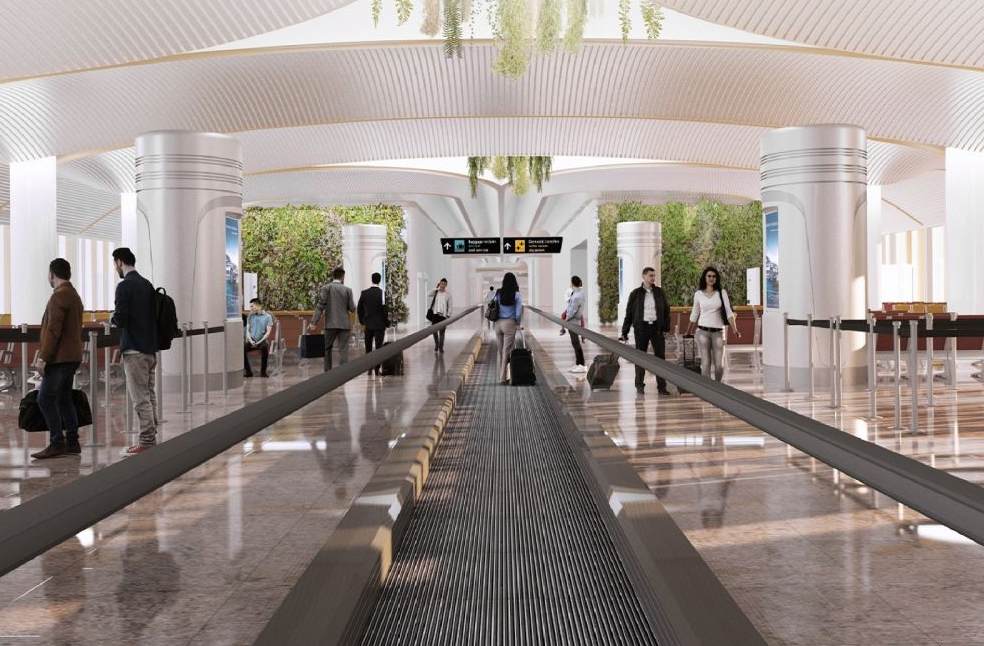
NMIA will also be India’s first fully digital airport, designed as a hub airport with advanced technology for check-in, security, baggage handling, and boarding, reducing turnaround times and facilitating easy transfers.
The airport has partnered with Indigo and Akasa Airlines for new routes, while Air India has committed to serving 15 cities initially and gradually scaling up operations, including international destinations. Given the capacity constraints of Mumbai’s current airport, analysts anticipate high demand for NMIA slots among carriers seeking to launch new routes.
Despite its advantages, the airport’s distance from Mumbai could inconvenience passengers, particularly those connecting between airports. Travel from certain suburbs may take two to three hours, and a direct 20-minute metro line connecting the old and new airports is unlikely to be operational for several years.
In the interim, NMIA plans to provide electric buses at regular intervals to facilitate passenger connections. For now, both airports will handle domestic and international traffic, though NMIA may eventually serve exclusively international flights once connectivity improves.

Experts also highlight connectivity and regulatory challenges that could affect NMIA’s potential to become an international hub like Singapore or Dubai. For example, transferring between domestic and international terminals requires repeat security screening, which is uncommon in major global airports.
Bansal emphasizes that regulatory changes, along with airlines’ willingness to expand long-haul destinations and optimize fleet strategies, will be critical to leveraging Mumbai’s strategic location between Europe, the US, and Asia.
For now, NMIA addresses Mumbai’s immediate air traffic congestion while serving a larger catchment area extending toward Pune, a major IT and educational hub. Similarly, Delhi is preparing to open its third airport at Jewar to serve satellite areas.
NMIA represents a major step in India’s aviation ambitions, offering a modern, high-capacity airport that will enhance both domestic and international connectivity while establishing Mumbai as a dual-airport city, capable of accommodating rising passenger demand and future aviation growth.
ALSO READ | Zodiacal Light: How to spot the subtle pre-dawn sky glow
