


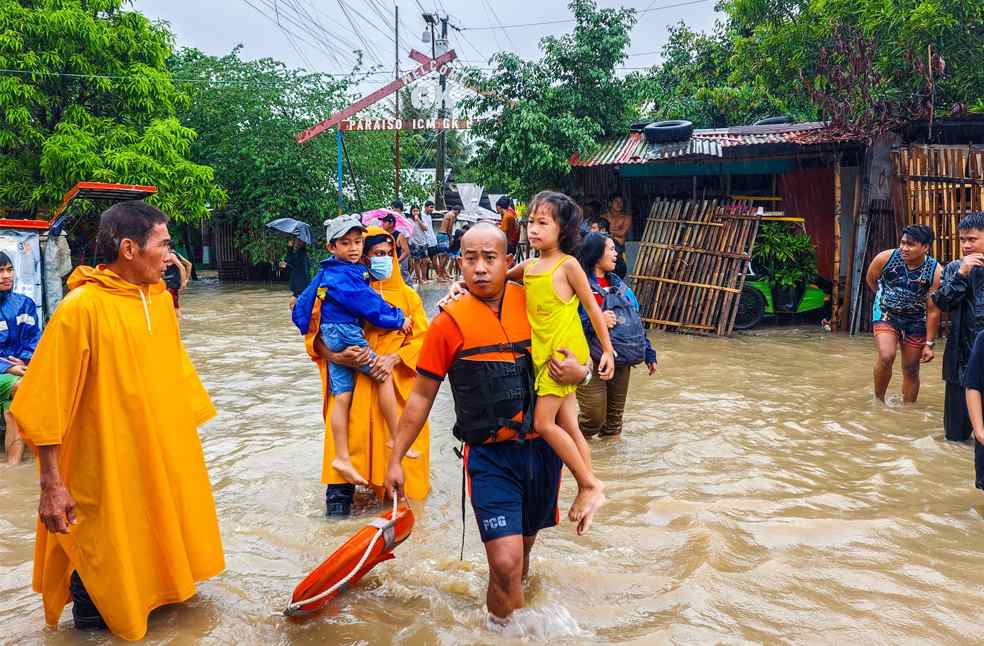
Manila: The Philippines is reeling once again from destructive weather as Severe Tropical Storm Bualoi swept across the central islands, killing at least four people, displacing hundreds of thousands, and triggering floods and mudslides, just days after Super Typhoon Ragasa left devastation in the region.
The Philippine weather bureau, Pagasa, reported that Bualoi, the country’s 15th tropical cyclone this year, was lashing the central islands as of 05:30 GMT September 26. The storm carried maximum sustained winds with gusts of up to 135 kilometres per hour (84 miles per hour) while moving northwest. Authorities warned of dangerous heavy rainfall in several provinces.
Civil defence official Bernardo Alejandro said that about 400,000 people were evacuated across multiple islands. Within that total, nearly 87,000 evacuees were reported in the eastern Bicol region. Provincial disaster offices added that more than 73,000 residents were sheltering in government facilities in Eastern Samar and Northern Samar.

Major media confirms that at least four people died in the Bicol region. Regional civil defence director Claudio Yucot said that three of the fatalities occurred on Masbate Island, one victim crushed by a falling tree, and another person was killed by lightning in Camarines Norte province. Masbate Governor Richard Kho stated that at least 20,000 people have been displaced on the island.
On the central island of Panay, provincial authorities reported that heavy rains caused a mudslide along a national highway. Social media images showed vehicles half-buried in mud as bulldozers worked to clear the road. In Iloilo province, floodwaters forced the evacuation of families, while parts of the capital Manila also experienced flooding, prompting school closures.
Bualoi’s impact adds to the suffering of communities already devastated by Super Typhoon Ragasa earlier this week, which killed at least nine in the Philippines and 17 in Taiwan while battering Hong Kong and southern China. Thousands of Filipinos remain displaced from that storm’s aftermath.

Natural and political storm
Forecasters warned that Bualoi could re-strengthen into a typhoon once it moves out over the South China Sea and continues on its path towards Vietnam. The Philippines, struck by an average of 20 storms and typhoons each year, faces heightened vulnerability as scientists caution that climate change is fueling stronger and more destructive weather systems.
The storm’s arrival also coincides with political turmoil. A major corruption scandal involving multibillion-dollar kickbacks tied to flood-control and infrastructure projects has implicated politicians, including allies of President Ferdinand Marcos Jr. The scandal has ignited public outrage and sparked a massive protest that turned deadly, further compounding the challenges faced by the nation during natural and political crises.
Images from Batuan town in Masbate province showed the Parish of the Immaculate Concepcion Church badly damaged by the storm, with residents assessing the destruction. A video shared online depicted widespread flooding and storm damage across the affected regions.
MOST READ | Apple urges EU to repeal DMA; Cites product delays
