


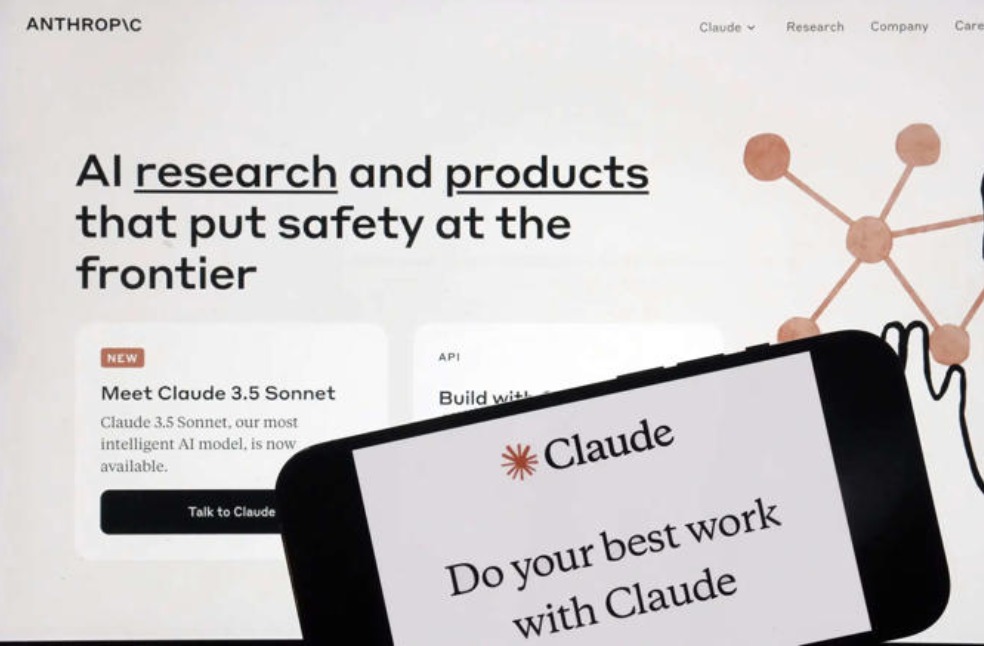
San Francisco: AI firm Anthropic has agreed to pay $1.5 billion to settle a class action lawsuit brought by authors who accused the company of using their copyrighted books without permission to train its Claude AI models. The settlement, which still requires the approval of US District Judge William Alsup, has been described by lawyers for the authors as the largest publicly reported copyright recovery in history.
The lawsuit was filed last year by authors Andrea Bartz, Charles Graeber, and Kirk Wallace Johnson, who alleged that Anthropic had built a business worth billions using pirated material. According to Judge Alsup’s earlier findings, the company has held more than seven million pirated books in its central library, exposing it to potential damages of up to $150,000 per copyrighted work.
In June, Judge Alsup ruled that the use of books to train AI did not directly violate US copyright law because the process was ‘exceedingly transformative.’ However, he allowed the case to move forward to trial, stating that Anthropic’s use of pirated material required further legal scrutiny. The company had been scheduled to stand trial in December.
Announcing the settlement, Anthropic said that the deal would resolve the plaintiffs’ ‘remaining legacy claims.’ Aparna Sridhar, Deputy General Counsel at the company, said that Anthropic remains committed to developing safe AI systems that support people, organisations, and scientific discovery.

Lawyer Justin Nelson, who represented the authors, said that the agreement is the first of its kind in the AI era and sets a precedent for compensating copyright holders. Nelson added that it sends a clear message to AI firms that building systems with pirated material is unacceptable.
Experts have said that the settlement could shape future cooperation between creators and AI developers. Alex Yang, Professor of Management Science and Operations at London Business School, noted that large language models depend on fresh human-created data, making fair compensation for authors essential.
The settlement has come at a time when other technology companies, including OpenAI, Microsoft, and Meta, face similar lawsuits over the use of copyrighted material in training their AI systems.
For Anthropic, which has marketed itself as an ethical alternative in the AI industry, the case underscores the growing pressure on technology companies to balance innovation with intellectual property rights.
MOST READ | OpenAI, Broadcom to debut first custom AI chip in 2026
