



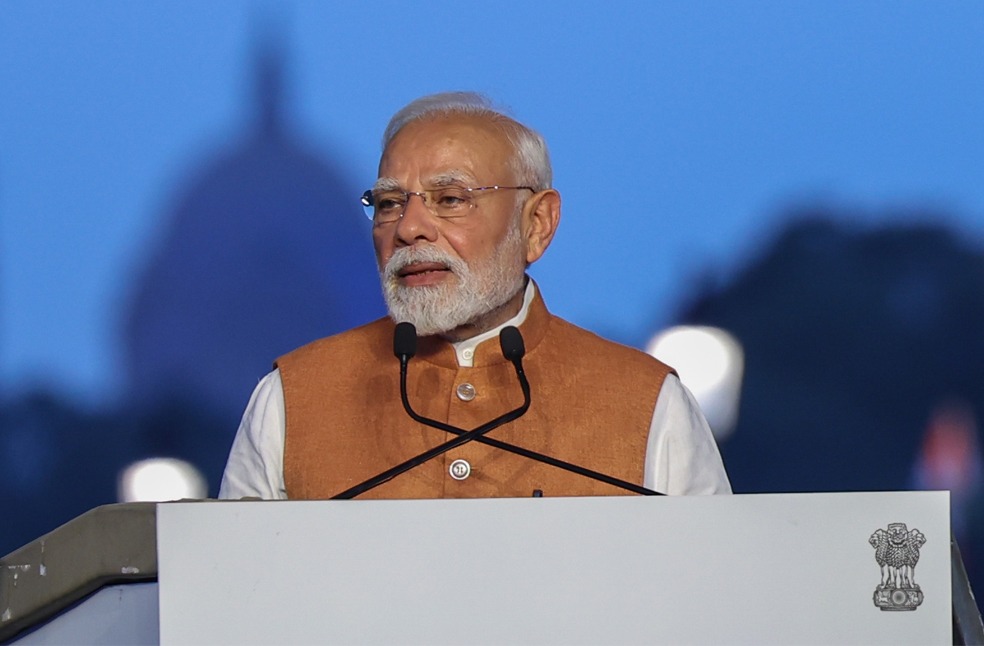
New Delhi: India is preparing to implement sweeping tax reforms under Prime Minister Narendra Modi’s administration, with plans to slash goods and services tax (GST) rates on small cars and insurance premiums.
According to a government source, the reform, touted as the most significant overhaul since the GST rollout in 2017, aims to stimulate consumer demand, strengthen the automobile and insurance sectors, and simplify the tax structure.
The federal government has proposed lowering the GST on small petrol and diesel cars to 18 percent from the current 28 percent, while health and life insurance premiums may see tax reduced to 5 percent or even zero from 18 percent. If approved, the changes are expected to take effect from October.
Markets responded positively to the announcement, with India’s benchmark Nifty index climbing 1.3 percent on August 18, marking its best trading day in three months. Auto stocks surged, with analysts noting that Maruti Suzuki would be the biggest beneficiary, given its reliance on small car sales.
Other automakers including Hyundai Motor India and Tata Motors are also set to gain. Insurance companies such as ICICI Prudential, SBI Life, and LIC saw share prices rise between 2 percent and 4 percent. The revised GST framework proposes only two primary tax slabs, 5 percent and 18 percent, effectively scrapping the highest 28 percent slab. However, a new 40 percent rate will be applied to 5–7 categories of ‘sin goods,’ including tobacco and luxury products.
Cars with larger engine capacities, which currently attract around 50 percent in combined taxes (28 percent GST plus up to 22 percent levy), may instead fall under the new 40 percent rate, though the government is considering additional surcharges to keep overall taxation unchanged at 43 percent–50 percent.
The proposal still requires approval from the GST Council, chaired by the federal finance minister with representation from all Indian states, which is expected to convene by October.
Industry experts argue that the cuts will make essential and aspirational goods more affordable, boosting consumption. However, the move could strain government revenues. Still, businesses and political analysts suggest that Modi’s bold tax strategy will enhance his economic credentials, especially amid ongoing trade tensions with Washington.

Sales of small cars, defined as petrol vehicles with engines below 1200cc or diesel vehicles below 1500cc and not exceeding 4 metres in length, have slowed in recent years as buyers shifted to larger SUVs.
Once accounting for nearly 50 percent of India’s 4.3 million passenger vehicle sales before COVID, small cars dropped to a third in the last fiscal year. For Maruti, which is majority-owned by Japan’s Suzuki Motor, this segment remains vital, making up half of its overall sales, though its market share has slipped from over 50 percent to about 40 percent in the last five years.
Meanwhile, India’s insurance penetration remains low at 3.8 percent of GDP (2024), according to the Swiss Re Institute. Industry leaders believe lower GST will boost insurance adoption.
Despite concerns over fiscal strain, the reform package has won broad approval from markets, businesses, and analysts who view it as a transformative step to make goods more accessible and revive slowing demand in critical sectors.
ALSO READ | Hurricane Erin weakens to Category 3; Threatens Caribbean, US
