



New York: The iconic hisses, pings, and screeches that heralded the arrival of the internet for millions of Americans will soon vanish for good when AOL’s dial-up internet service is officially retired at the end of September.
AOL, formerly known as America Online, has announced that it will discontinue support for dial-up software on September 30, following a review of its products and services.
For many millennials, Gen Xers, baby boomers, and members of the greatest generation, the sound of modems performing an analog handshake was the prelude to a new digital frontier, one that brought emails, instant messages, chatrooms, glowing computer screens, and the mouse clicks of early web navigation.
Dial-up internet wasn’t the creation of a single individual. It first emerged through Usenet in the late 1970s. In 1979, CompuServe began offering consumers a dial-up information service.
By the mid-1980s, virtual communities began forming, such as The WELL (Whole Earth ’Lectronic Link), launched in the San Francisco Bay Area by Stewart Brand and Larry Brilliant. In 1985, America Online was founded, paving the way for one of the most recognisable names in early internet history.
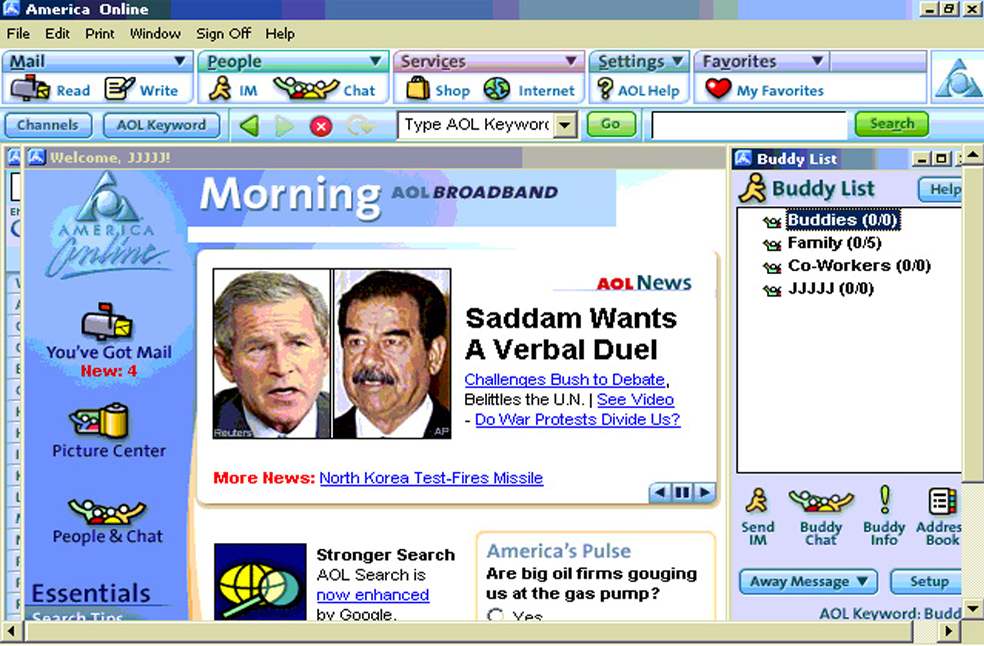
By the late 1990s and early 2000s, AOL had more than 23 million subscribers in the US, making it the dominant internet service provider. According to Jigso AI, AOL was estimated to be gaining a new user every six seconds.
Its cheery ‘You’ve got mail’ notification became a cultural touchstone. In 1999, AOL acquired Time Warner in a monumental $165 billion all-stock deal, a merger that would later be remembered as one of the most disastrous in media and communications history.
The rise of cable internet in 1995, which used existing TV infrastructure to offer faster speeds, signalled the gradual decline of dial-up’s familiar connection tones. Today, only about 175,000 US households still rely on dial-up for internet access and web browsing.
Even the web browser itself, once central to online access and famously at the heart of the 1990s ‘browser wars’ between Microsoft and Netscape, is losing relevance to apps and emerging AI-driven platforms. Dial-up internet’s growth, reportedly fuelled in part by demand for online pornography, helped propel the spread of the World Wide Web.
AOL’s shutdown joins a long list of bygone 1990s cultural fixtures, including CDs, pagers, and landline phones. With its retirement, a defining chapter of early online life, complete with its unmistakable soundtrack, will finally come to a close.
ALSO READ | Tesla seeks UK licence to supply power as EV sales decline
