



London: Heathrow Airport has announced a $64.7 billion (£49 billion) plan to expand and modernise the UK’s largest airport, including the creation of a third runway and major infrastructure upgrades.
The proposed expansion, funded entirely by private finance, is intended to increase passenger capacity from 84 million to 150 million annually, with up to 756,000 flights per year. Heathrow CEO Thomas Woldbye described the plan as urgent, arguing that the airport is operating at full capacity, which is detrimental to trade and connectivity. The government has expressed support for the expansion, with Chancellor Rachel Reeves stating it would help make Britain the world’s best-connected place to do business.
The centrepiece of the proposal is the construction of the ‘North-Western Runway’, a 3,500-metre (11,500 ft) addition that would enable the airport to handle the growing demand for air travel. Accompanying projects include the construction of a new terminal, T5X, the expansion of Terminal 2, the closure of Terminal 3, enhancements to local rail, road, walking, and cycling access, and the construction of a new road tunnel to reroute the M25 motorway.
A Heathrow spokesperson claimed the project would grow the UK economy by 0.43 percent of GDP, labelling it an investment in the nation’s future. Industry groups, including the CBI, British Chambers of Commerce, and MakeUK, praised the move, citing increased trade access and job creation.
The announcement follows the emergence of a rival proposal from the Arora Group. The Heathrow West plan would avoid rerouting the M25 by constructing a shorter 2,800-metre (9,200 ft) runway, estimated to cost under $33 billion (£25bn). Arora’s plan also includes a phased terminal expansion set for completion between 2035 and 2040.
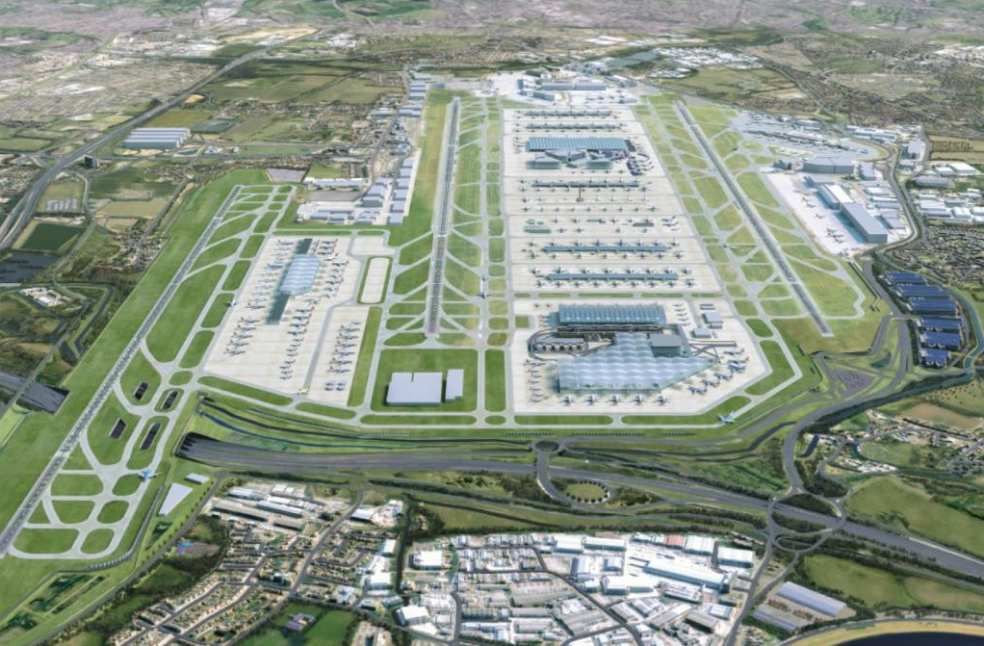
While Heathrow maintains its longer runway is essential to meet future capacity needs, Woldbye said he is open to discussing alternatives that provide equivalent benefits.
The proposal has triggered strong backlash from environmental organisations, local communities, and political leaders. Greenpeace UK’s Dr. Douglas Parr labelled Heathrow’s green claims as hopeful marketing spin and urged the introduction of a frequent flier levy instead of airport expansion.
London Mayor Sir Sadiq Khan warned the expansion would severely impact air quality, noise levels, and climate targets, and pledged City Hall would “scrutinise the impact” on surrounding communities and transport systems.
Residents in Harmondsworth, a village adjacent to the airport, expressed concern that up to a third of their homes could be demolished. Liberal Democrats and Green Party leaders echoed fears that the expansion undermines the UK’s climate commitments, with the Greens dismissing Labour’s environmental stance as hollow.
Transport Secretary Heidi Alexander said the proposals mark a significant step toward improving national infrastructure and connectivity, confirming that both Heathrow’s and Arora’s plans will be reviewed over the summer ahead of a formal revision of the Airports National Policy Statement.
Despite government support, Heathrow’s expansion history has been rocky. Past efforts by both Labour and Conservative governments have failed due to legal battles, political division, and the pandemic.
MOST READ | Russian missile barrage hits Kyiv; Killing at least 6 and injuring dozens
