


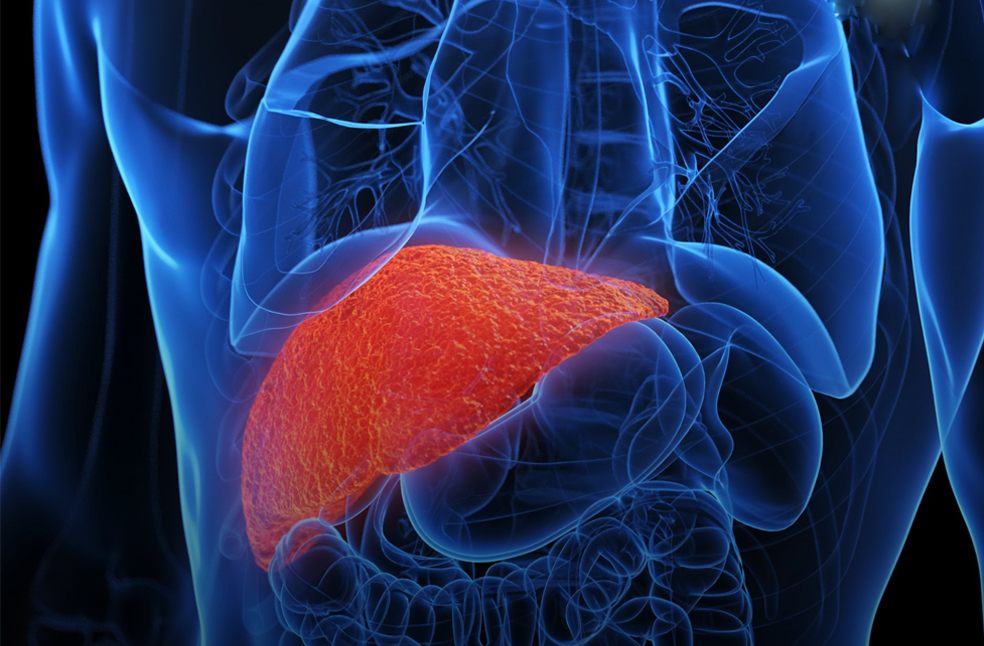
London, UK: A new report from the Lancet Commission on Liver Cancer has revealed that three out of five global liver cancer cases could be prevented through targeted public health strategies such as reducing obesity, limiting alcohol consumption, and expanding hepatitis B vaccination programs.
The commission’s findings show that addressing major risk factors, including fatty liver disease and viral hepatitis B and C, could reduce liver cancer incidence by 2 percent to 5 percent annually by 2050, potentially preventing between 9 and 17 million new cases and saving 8 to 15 million lives.
Prof Jian Zhou, from Fudan University in China and lead researcher of the commission, emphasized the growing threat, and said that, “Liver cancer is a growing health issue around the world. It is one of the most challenging cancers to treat, with five-year survival rates ranging from approximately 5 percent to 30 percent. We risk seeing close to a doubling of cases and deaths from liver cancer over the next quarter of a century without urgent action to reverse this trend.”
Currently, liver cancer ranks as the sixth most common cancer worldwide and is the third leading cause of cancer-related death. Annual fatalities are projected to climb from 760,000 in 2022 to 1.37 million by 2050. Simultaneously, new liver cancer cases are expected to increase from 870,000 in 2022 to 1.52 million by 2050, primarily due to population growth and ageing, with the most significant rises predicted in Africa.

China accounts for more than 40 percent of global liver cancer cases, largely due to high hepatitis B infection rates.
Among the most alarming trends is the rise in fatty liver disease, now recognized as one of the fastest-growing causes of liver cancer worldwide. An estimated one-third of the global population is affected by metabolic dysfunction-associated steatotic liver disease (MASLD), formerly known as non-alcoholic fatty liver disease, where fat accumulates in the liver.
MASLD can be prevented with a healthy diet, physical activity, and weight management. Around 20 percent to 30 percent of people with MASLD progress to a more severe form called metabolic dysfunction-associated steatohepatitis (MASH), which poses a direct cancer risk. The share of liver cancer cases attributed to MASH is forecast to rise from 8 percent in 2022 to 11 percent in 2050.
The second fastest-growing cause is alcohol consumption, with liver cancer cases due to alcohol projected to rise from 19 percent to 21 percent by 2050. Conversely, the proportion of liver cancer cases linked to hepatitis B is expected to drop from 39 percent to 37 percent, and those associated with hepatitis C are expected to decline from 29 percent to 26 percent.
Prof Hashem B. El-Serag of Baylor College of Medicine in the US, another co-author, explained the shifting landscape and highlighted that, “Liver cancer was once thought to occur mainly in patients with viral hepatitis or alcohol-related liver disease. However, today, rising rates of obesity are an increasing risk factor for liver cancer, primarily due to the increase in cases of excess fat around the liver.”
To counter this global health crisis, the commission proposed a series of policy recommendations, including:
- Expanding hepatitis B vaccination programs and introducing universal adult screening
- Implementing minimum alcohol unit pricing, sugar taxes, and warning labels
- Investing in the early detection of liver damage and cancer
- Improving palliative care for liver cancer patients
Prof Valérie Paradis of Beaujon Hospital in France stressed the critical need for awareness, and remarked that, “Compared with other cancers, liver cancer is very hard to treat but has more distinct risk factors, which help define specific prevention strategies. With joint and continuous efforts, we believe many liver cancer cases can be prevented, and both the survival and quality of patients with liver cancer will be considerably improved.”
Dr. Matt Hoare, a hepatology expert from the University of Cambridge’s Early Cancer Institute, added that liver cancer stands out because its death rate continues to rise, with causes differing by region.
Dr. Hoare pointed to Japan as a successful case, where public health policy changes, improved prevention, and early detection helped reduce mortality. His research team is now working on identifying liver disease patients most likely to develop cancer using DNA sequencing techniques.
The commission concludes that liver cancer, despite its severity, offers clear prevention pathways, but only if urgent and coordinated action is taken globally.
ALSO READ | Google admits alert system failed in 2023 Turkey earthquake
