


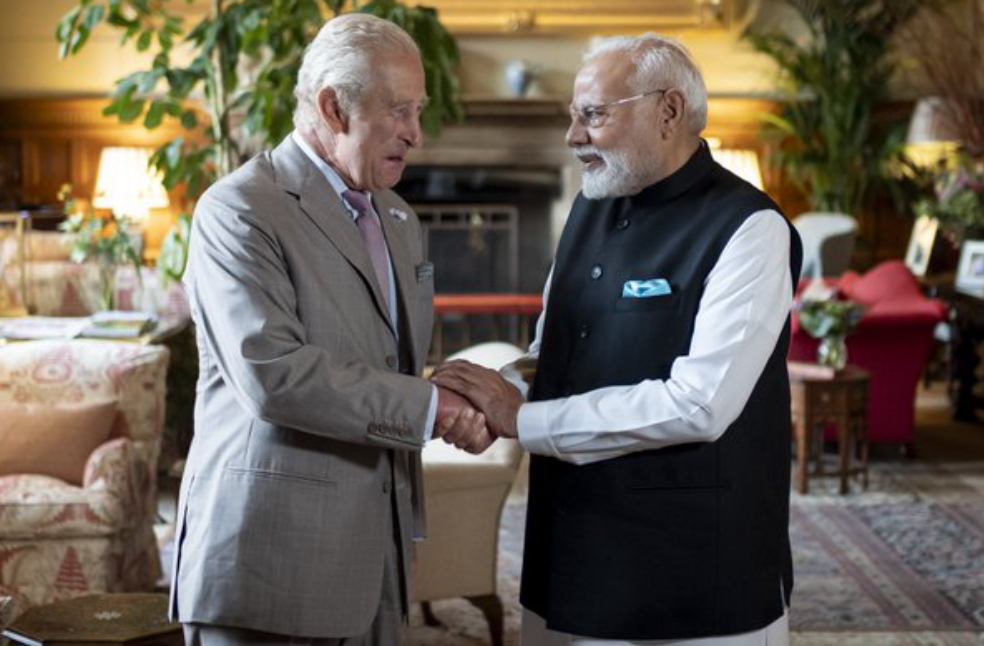
Norfolk: King Charles has met Indian Prime Minister Narendra Modi at his Sandringham estate in Norfolk, shortly after a landmark free trade deal was signed between the United Kingdom and India.
The United Kingdom and India have signed a landmark free trade agreement aimed at boosting exports, reducing tariffs, and strengthening economic and strategic cooperation. The deal was formally signed at Chequers by Indian Prime Minister Narendra Modi and UK Prime Minister Sir Keir Starmer.
The agreement, three years in the making, marks the UK’s most significant post-Brexit trade achievement. Once fully implemented, it is expected to inject $6.47 billion (£4.8 billion) annually into the British economy and create over 2,200 new jobs across the UK.
UK exports to India, including luxury cars, medical devices, whisky, and aerospace components, will see average tariffs slashed from 15 percent to 3 percent, dramatically improving competitiveness. Whisky duties alone will be reduced from 150 percent to 75 percent, with a further cut to 40 percent by 2035. Indian exports such as textiles, gems, footwear, seafood, and engineering goods will gain easier access to the UK market, with reduced tariffs on clothing, jewellery, and food items. Indian electric and hybrid vehicle manufacturers are also set to benefit from improved terms for market entry in the UK.
The agreement also expands cooperation beyond trade, with commitments to deepen partnerships in defence, education, technology, climate action, and law enforcement. A new criminal records sharing arrangement is expected to enhance efforts to combat organised crime, serious fraud, and illegal migration. The deal introduces a revised social security framework that allows workers on temporary assignments to pay contributions only in their home country.
While some political leaders raised concerns about the impact on British workers, the UK government maintains the arrangement mirrors similar agreements already in place with countries including the EU and the United States.
Prime Minister Modi described the agreement as a blueprint for shared prosperity, highlighting the benefits in trade access and affordability of key products. UK Prime Minister Sir Keir Starmer called it the most economically significant trade deal since Brexit and declared that the UK is now firmly open for business. King Charles hosted Prime Minister Modi at Sandringham following the signing ceremony, where Modi presented the monarch with a tree as a gift to be planted in autumn, in line with an Indian initiative promoting environmental awareness by planting trees in honour of mothers.
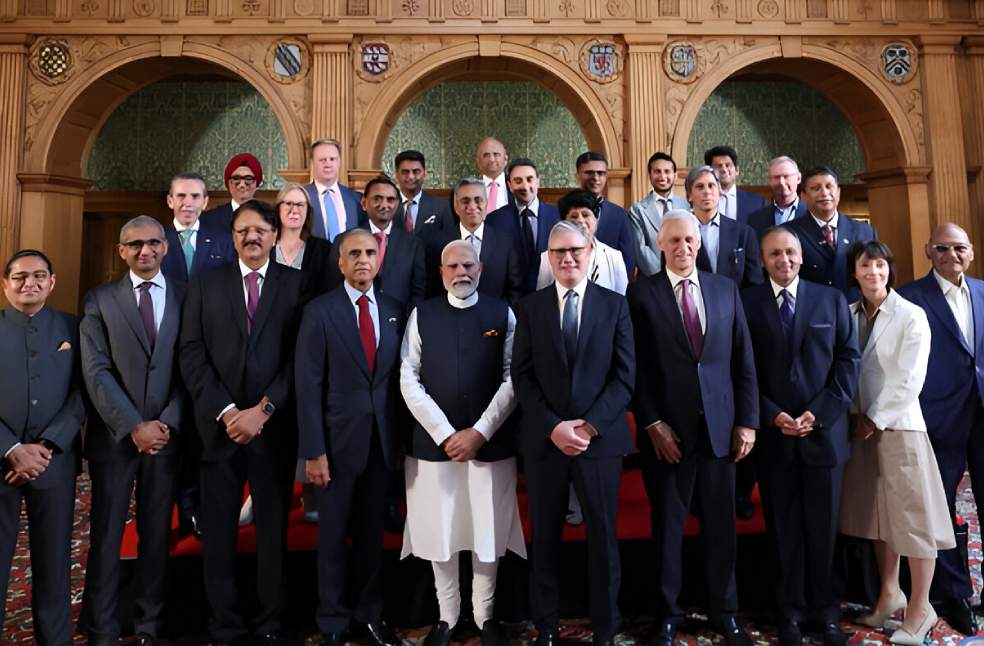
Political reactions to the deal have been mixed. Business Secretary Jonathan Reynolds dismissed fears that the agreement could undercut British workers. Conservative shadow business secretary Andrew Griffith said the deal was only possible because of Brexit but warned that Labour’s tax and regulatory policies could undermine its impact. Liberal Democrat foreign affairs spokesperson Calum Miller argued that while the deal offers some economic benefit, it falls short compared to what could be achieved through improved UK-EU trade relations.
Despite its broad scope, the agreement stops short of offering the UK full access to India’s financial and legal services sectors. Discussions continue on a separate bilateral investment treaty aimed at protecting investments in both countries.
Negotiations are also ongoing regarding the UK’s proposed carbon tax, which India argues could unfairly affect its exports. Although the Indian cabinet has already approved the agreement, it still awaits ratification by the UK Parliament and is expected to come into force within the next year.
MOST READ | Australia lifts long-standing US beef ban after review
