


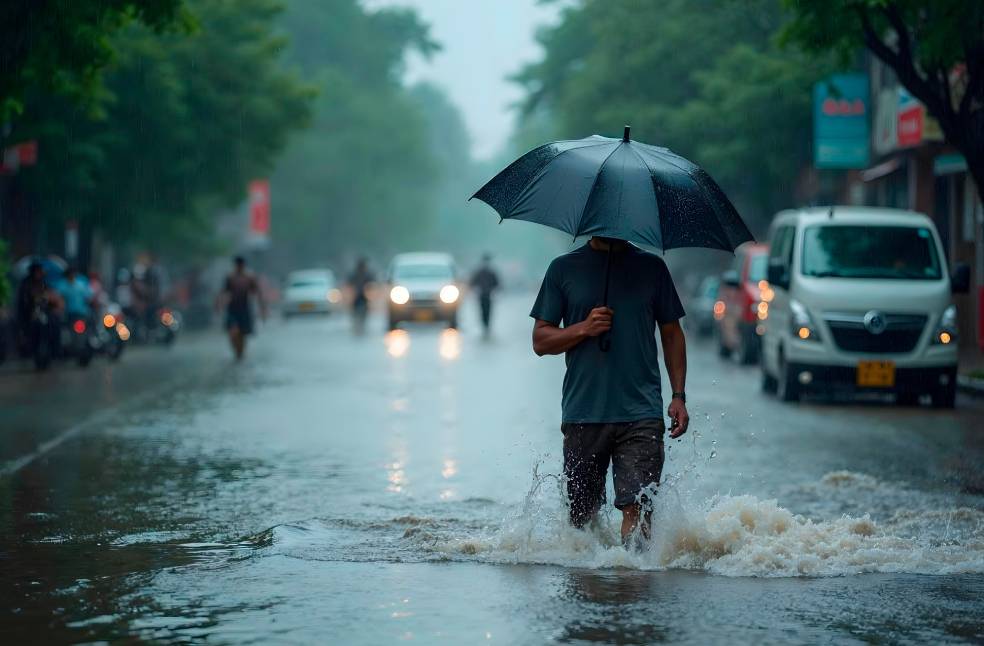
Pakistan: At least 63 people have lost their lives and 290 others have been injured in Pakistan’s Punjab province within the last 24 hours, as relentless monsoon rains triggered widespread devastation across the region.
According to the National Disaster Management Authority (NDMA), most fatalities occurred due to building collapses, while others were caused by drowning and electrocution. The deluge began, submerging towns and overwhelming infrastructure.
In Rawalpindi, adjacent to the capital Islamabad, authorities declared as a public holiday and urged residents near the rising Leh Nullah river to evacuate immediately. Emergency alerts were issued as swollen rivers and inundated streets forced the closure of key expressways and grounded dozens of flights.
The death toll from this year’s monsoon rains across the country has now reached nearly 180, with more than half of the victims being children. Punjab Chief Minister Maryam Nawaz declared an emergency in several flood-hit districts.

In Chakwal, where over 400mm of rainfall was recorded in just 24 hours, rescue teams deployed boats to reach stranded residents. Military helicopters were also seen surveying the flood-ravaged zones. The provincial disaster response units remain on high alert as the Pakistan Meteorological Department has forecast continued rainfall and possible flash floods through the weekend.
Pakistan, home to nearly 250 million people, remains highly vulnerable to climate change. The country is impacted by extreme weather systems ranging from severe droughts to heavy monsoons and is witnessing the rapid melting of its 13,000-plus glaciers.
The 2022 monsoon season caused catastrophic flooding that submerged a third of the country and killed more than 1,700 people, resulting in economic losses exceeding $30 billion. In its aftermath, the UN Secretary-General described Pakistan as being doubly victimised by global climate inaction and an unjust financial system.
As torrential rains continue to batter Punjab, authorities are urging citizens to stay indoors, avoid flood-prone areas, and cooperate with ongoing relief operations.
MOST READ | UK’s 1st babies born using DNA from 3 people to prevent fatal disease
