


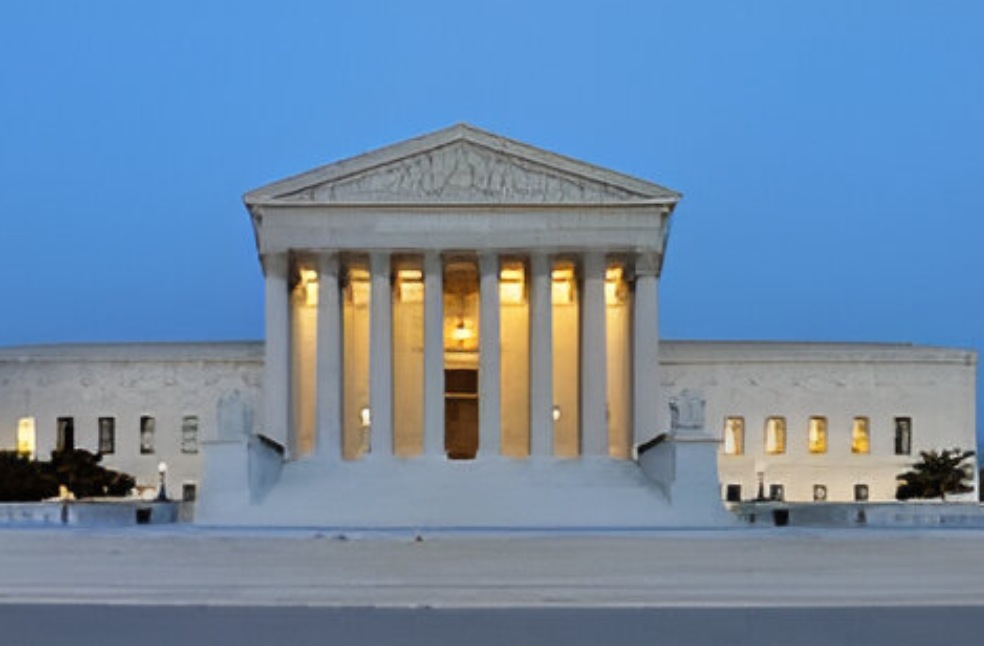
Washington D.C.: The US Supreme Court has allowed the Trump administration to deport eight men, most of whom have no ties to South Sudan to the war-torn country after detaining them for weeks at a US military base in Djibouti.
The court’s order follows a previous ruling by its conservative majority, allowing immigration officials to expedite deportations to third countries without requiring proof that the deportees would face danger. The men, originally from countries including Vietnam, South Korea, Mexico, Laos, Cuba, and Myanmar, were informed by the US government that they would be sent to South Sudan, despite only one of them holding South Sudanese nationality.
The legal battle began after the group refused to sign documents consenting to deportation to South Africa, initially proposed by the government and challenged the move in court. A US district judge, Brian E. Murphy of Massachusetts, had ruled that immigrants must be provided written notice and an opportunity to express reasonable fear of torture or persecution before being deported to a third country. That ruling was paused by the Supreme Court last month.
Trina Realmuto, executive director of the National Immigration Litigation Alliance and attorney for the men, said they face difficult conditions, and potentially immediate detention upon arrival in South Sudan.
Justice Sonia Sotomayor, joined by Justice Ketanji Brown Jackson, issued a strong dissent, condemning the ruling for giving undue leeway to the executive branch. Sotomayor stated that, “What the government wants to do, concretely, is send the eight noncitizens it illegally removed from the United States from Djibouti to South Sudan, where they will be turned over to the local authorities without regard for the likelihood that they will face torture or death.”
Sotomayor added that, “Today’s order clarifies only one thing: Other litigants must follow the rules, but the administration has the Supreme Court on speed dial.”
The eight men had all been convicted of serious crimes, which the Trump administration has cited to justify the deportations. Some of the individuals, including Tuan Thanh Phan who immigrated to the US from Vietnam as a child and was convicted of homicide at 18, had completed or nearly completed their prison terms and were prepared to return to their home countries.
However, in an unusual move, the men were flown instead to Camp Lemonnier, the American military base in Djibouti. According to sworn declarations, the detainees suffered from illness, inadequate medical care, and were revealed to malaria risks and potential regional militant threats. ICE agents were reportedly working 12-hour shifts to guard the men.
In May, the Trump administration petitioned the Supreme Court to intervene, aiming to ease deportation in the absence of repatriation agreements with the men’s home countries. Seeking alternate solutions, the administration reportedly pursued deals with various countries willing to accept individuals who cannot be immediately returned to their nations of origin.
The White House and Department of Homeland Security have yet to comment on the Supreme Court’s decision.
MOST READ | Ferry sinks off Bali: At least 5 dead and dozens missing
