


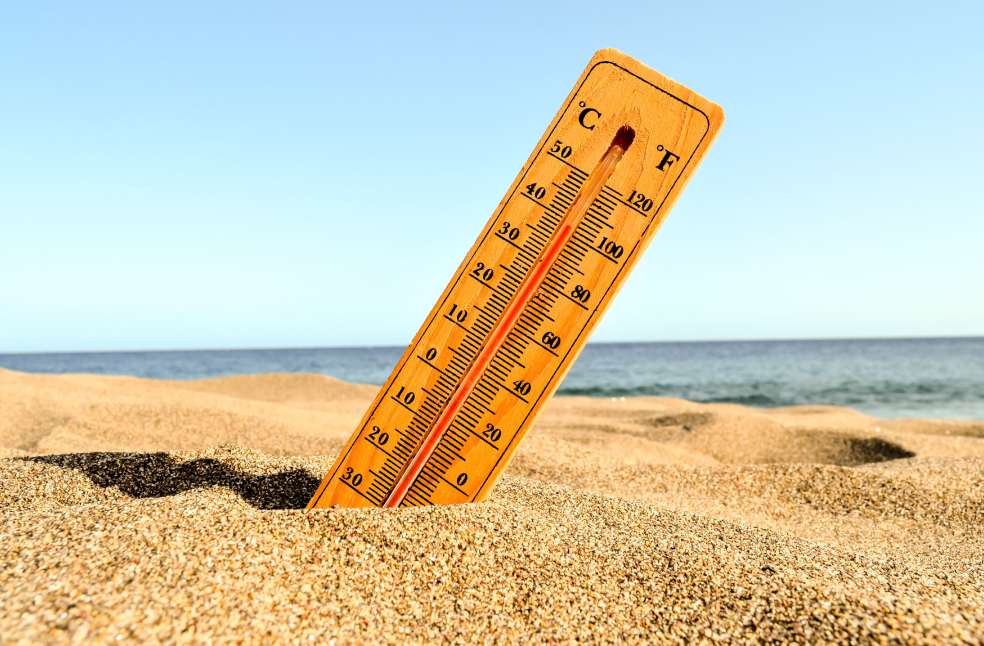
Spain: Large parts of Europe have remained in the grip of an unrelenting heatwave, with health authorities across the continent issuing urgent warnings as temperatures soar well above seasonal norms.
Southern Spain has emerged as the epicentre of the extreme heat, with the town of El Granado recording a blistering 46 degrees Celsius, a new national record for June, according to Spain’s national weather service. Seville and surrounding areas have consistently seen temperatures in the mid-40s, and forecasters warn this could be the hottest June on record.
Red warnings are currently in force in parts of Portugal, Italy, and Croatia, while amber alerts span much of southern and central Europe, including regions of Spain, France, Austria, Belgium, Bosnia & Herzegovina, Hungary, Serbia, Slovenia, and Switzerland.
In Barcelona, the heat claimed a life, when a municipal road sweeper collapsed and died after completing her shift. Authorities are investigating the cause of her death, believed to be heat-related.
Hospitals in Italy are seeing a surge in heatstroke cases, especially among vulnerable groups including the elderly, cancer patients, and homeless individuals. Mario Guarino, vice president of the Italian Society of Emergency Medicine stated that, “Emergency departments across the country have been put under pressure.” Naples’ Ospedale dei Colli has created fast-track ‘heatstroke pathways’ to deliver critical treatments such as cold water immersion.

Cities are also stepping up protective measures. Bologna has opened seven climate-controlled shelters offering cold water and relief from the heat, while Rome is allowing residents over 70 to access public swimming pools free of charge.
Meanwhile, in Portugal, where capital Lisbon is under an amber heat warning, a local pharmacist told that heatstroke and burn cases are already being reported despite repeated warnings for people to stay indoors during peak hours.
The western Balkans are also enduring scorching conditions. Serbia recorded its highest-ever temperature since official records began in the 1800s, and Slovenia saw its hottest June day. North Macedonia hit 42 degrees Celsius.
As high pressure continues to dominate the region, more countries are bracing for worsening conditions. Forecasters predict further spikes in temperature across France, Germany, Italy, and the UK through the week. In London, thermometers could climb to 35 degrees Celsius, prompting yellow and amber alerts.
Meteorologists explain that a large area of high pressure is driving the intense heat, with dry, descending air compounding the warming effect. The system is expected to shift eastward, pulling extreme temperatures further north and east.
While individual weather events are complex, scientists stress that climate change is intensifying both the frequency and severity of heat waves. According to researchers at World Weather Attribution, three-day heatwaves with temperatures over 28 degrees Celsius are now ten times more likely than during pre-industrial times.
As Europe continues to endure these dangerous conditions, authorities are urging citizens to remain vigilant, stay hydrated, and avoid exposure during peak sunlight hours.
MOST READ | UN nuclear chief warns Iran could resume uranium enrichment
