


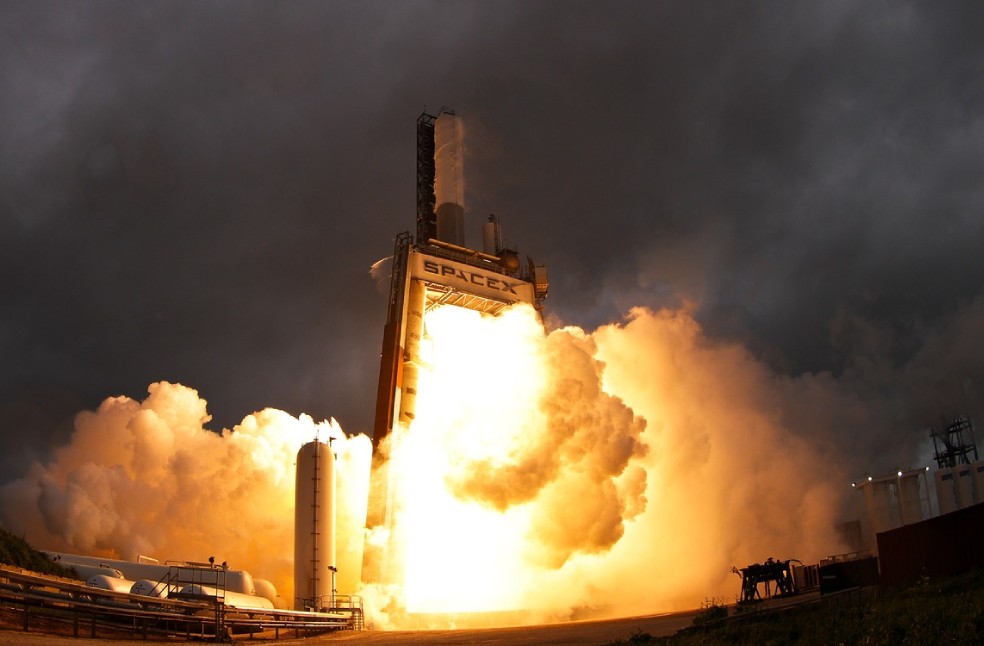
Texas: SpaceX’s ambitious Mars mission has faced a fresh hurdle as its enormous Starship rocket exploded during a test at the company’s Texas facility. The SpaceX Starship blast added to a series of setbacks that continue to challenge Elon Musk’s vision of reaching the Red Planet.
The SpaceX Starship blast occurred while Starship was positioned on a test stand at SpaceX’s Starbase in Brownsville, Texas. The spacecraft was being prepared for its tenth test flight when the failure struck. In a statement posted on Musk’s social media platform X, SpaceX confirmed the incident and assured that all personnel were safe.
The company described the incident as a major anomaly and stated that engineering teams are investigating. Coordination is ongoing with local, state, and federal agencies to assess safety and environmental implications.
Musk explained that, “Preliminary data suggests that a nitrogen COPV in the payload bay failed below its proof pressure. The Composite Overwrapped Pressure Vessel (COPV) is a nitrogen gas storage unit. If further investigation confirms that this is what happened, it is the first time ever for this design.”
Footage shared online captured at least two rapid explosions, lighting up the night sky and scattering debris. The towering 400-foot (122-metre) Starship is central to Musk’s long-term goal of making human life multi-planetary. Yet, technical challenges persist.
In May, another Starship test spun out of control mid-flight, failing to meet key testing goals. That flight had lifted off successfully but lost stability, forcing multiple aircraft to reroute and triggering safety concerns as debris threatened areas across the Caribbean.
Two months earlier, Starship exploded in space shortly after launch. The U.S. Federal Aviation Administration (FAA) temporarily halted air traffic in parts of Florida following the incident. Social media videos showed fiery debris streaking through skies near South Florida and the Bahamas after the engines shut down.
In January, yet another failure saw Starship disintegrate minutes after launch, with debris landing over Caribbean islands and causing minor damage in Turks and Caicos. The FAA concluded its investigation into the May mishap earlier this month, identifying a hardware failure in one engine as the probable cause. SpaceX addressed eight corrective measures before resuming tests.
Despite these repeated setbacks, Musk remains undeterred. He continues to describe such incidents as minor setbacks, maintaining his determination to advance the Starship programme towards its ultimate Mars objective.
ALSO READ | Ahmedabad Air India Crash: 1 Engine new and other cleared for use
